
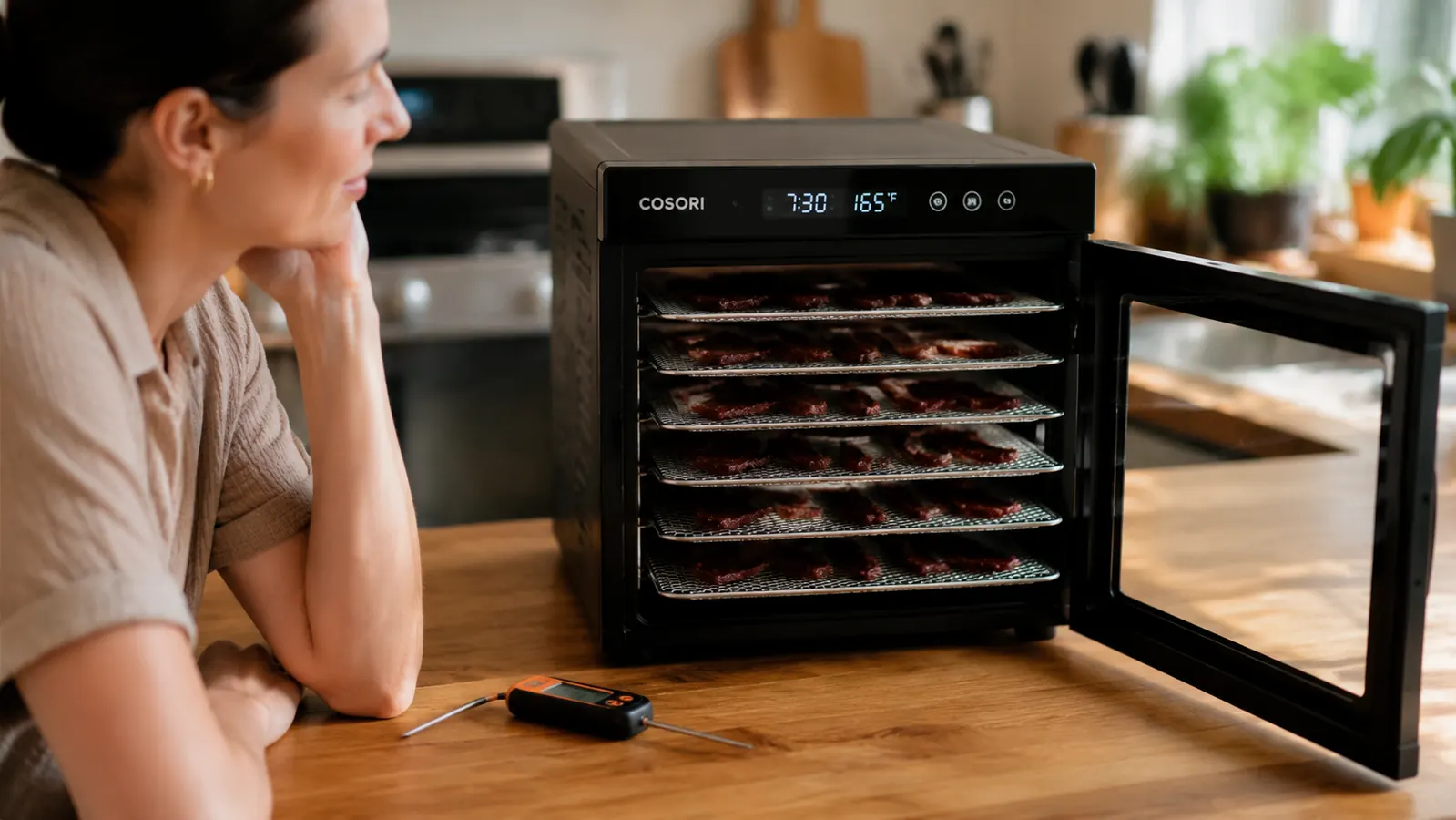
The jerky bag at my grocery store costs $8.99 for two ounces, and half of those ounces are gristle and preservatives I can't pronounce. I used to grab one on the way out of every road trip until I did the math: at that price, I was spending more per pound on jerky than I do on the steak it's made from. That's what pushed me to buy a Cosori Food Dehydrator two years ago, and making beef jerky at home turned out to be the single best reason I own it.
This isn't a vague 'dehydrators are great' post. It's the exact process I use every time I make a batch of jerky in my Cosori, from picking the right cut of meat to knowing when a strip is actually done and not just dry on the outside and raw in the middle. I'll walk through five steps, and I'll flag the one food safety detail most jerky tutorials skip past, the internal temperature the meat needs to hit before it's safe to eat. None of this requires special equipment beyond the dehydrator itself, a sharp knife, and a gallon zip bag, so if you've been putting off making your own jerky because it sounded complicated, it isn't.
Skip the $9 Grocery Store Bag
The Cosori Food Dehydrator has five BPA-free trays, a 165°F setting that clears the USDA safety threshold for meat, and a 48-hour timer so you can set a batch and walk away. It's what I use for every recipe in this guide.
Amazon Check Today's Price on Amazon →Step 1: Choose and Trim Your Meat
I default to eye of round or top round for jerky. Both cuts are lean, which matters because fat doesn't dehydrate, it goes rancid, and a fatty jerky strip will spoil faster on the shelf than a lean one will. A 2-pound eye of round runs me about $11 at my local store, and it fills all five trays of the Cosori with room to spare. Flank steak works too if you want a slightly beefier flavor, though it costs more per pound and has a looser grain that can shred a little when you bend a finished strip.
The trim matters as much as the cut. I go over the meat with a boning knife and cut away every visible strip of white fat and silver skin before slicing, because those spots turn chewy and slick instead of drying evenly. Fifteen minutes with a sharp knife pays for itself over the five hours the dehydrator runs later. I do this trimming on a separate cutting board from anything else in my kitchen and wash it immediately after, since raw beef trimmings are exactly the kind of thing that cross-contaminates a countertop if you're not careful.
For slicing, I put the roast in the freezer for 45 minutes first. Partially frozen meat holds its shape under the knife and gives me clean quarter inch strips instead of ragged ones. I slice against the grain for jerky that snaps cleanly, or with the grain if I want the classic chewier gas station texture, that's really a personal preference, not a rule. Whichever direction I choose, I try to keep every strip roughly the same thickness, because uneven strips are the number one reason a batch finishes with some pieces perfectly dry and others still tacky in the middle.
Step 2: Build a Marinade That Actually Penetrates
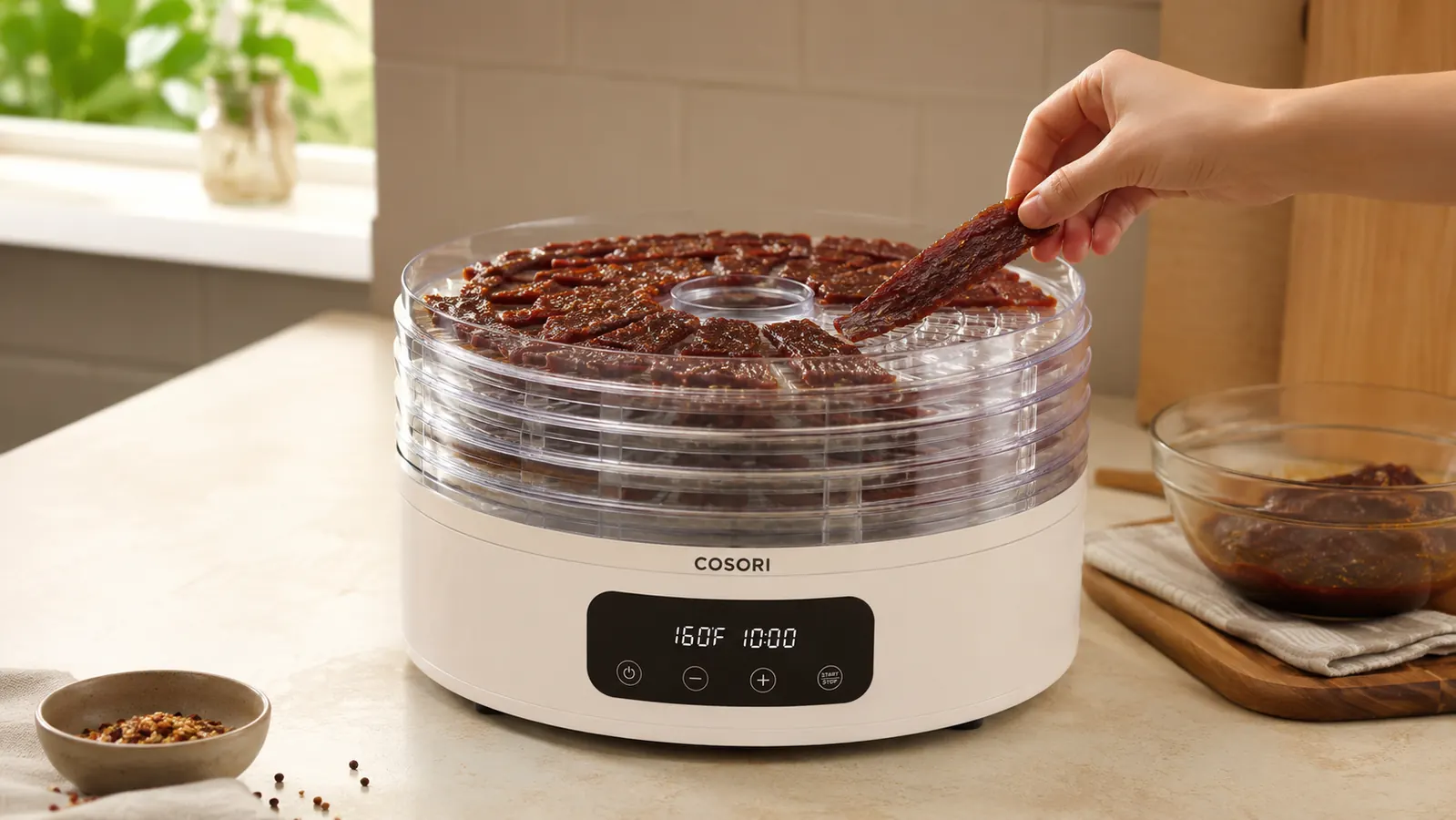
My go-to marinade is simple: half a cup of soy sauce, two tablespoons of Worcestershire, a tablespoon of brown sugar, a teaspoon of black pepper, a teaspoon of garlic powder, and a teaspoon of onion powder, scaled up for 2 pounds of meat. I whisk it together in a gallon zip bag rather than a bowl, because the bag lets the marinade contact every surface of every strip without me having to stir, and it takes up far less fridge space than a covered bowl.
Salt is doing two jobs here, not one. It's flavor, but it's also part of what makes the meat shelf stable, since salt pulls moisture out through osmosis the same way the dehydrator will later. If a marinade recipe tastes under-salted to you before it touches the meat, it's under-salted, don't be shy with the soy sauce. I've also started adding a teaspoon of red pepper flakes to about a third of every batch, just so I have a spicier option without marinating a whole separate bag of meat.
I've tried teriyaki, chili-lime, and a black pepper cracked version with the same base marinade, just swapping the seasonings. All of them work fine in the Cosori because the trays and the airflow don't care what the marinade tastes like, they only care about thickness and moisture content, which is the next step. If you're experimenting with a new marinade recipe, I'd still keep the salt-to-liquid ratio close to what I described above, since that's the part doing the food safety work, not just the flavor work.
Step 3: Marinate Safely and Long Enough
I marinate for a minimum of 6 hours and usually go closer to 12 to 24, always in the refrigerator, never on the counter. Raw meat sitting at room temperature is exactly the kind of thing that grows bacteria fast, so the bag goes on the bottom shelf of my fridge where it can't drip onto anything else. I flip the bag once or twice during that window just to make sure marinade isn't pooling on one side while the other sits dry.
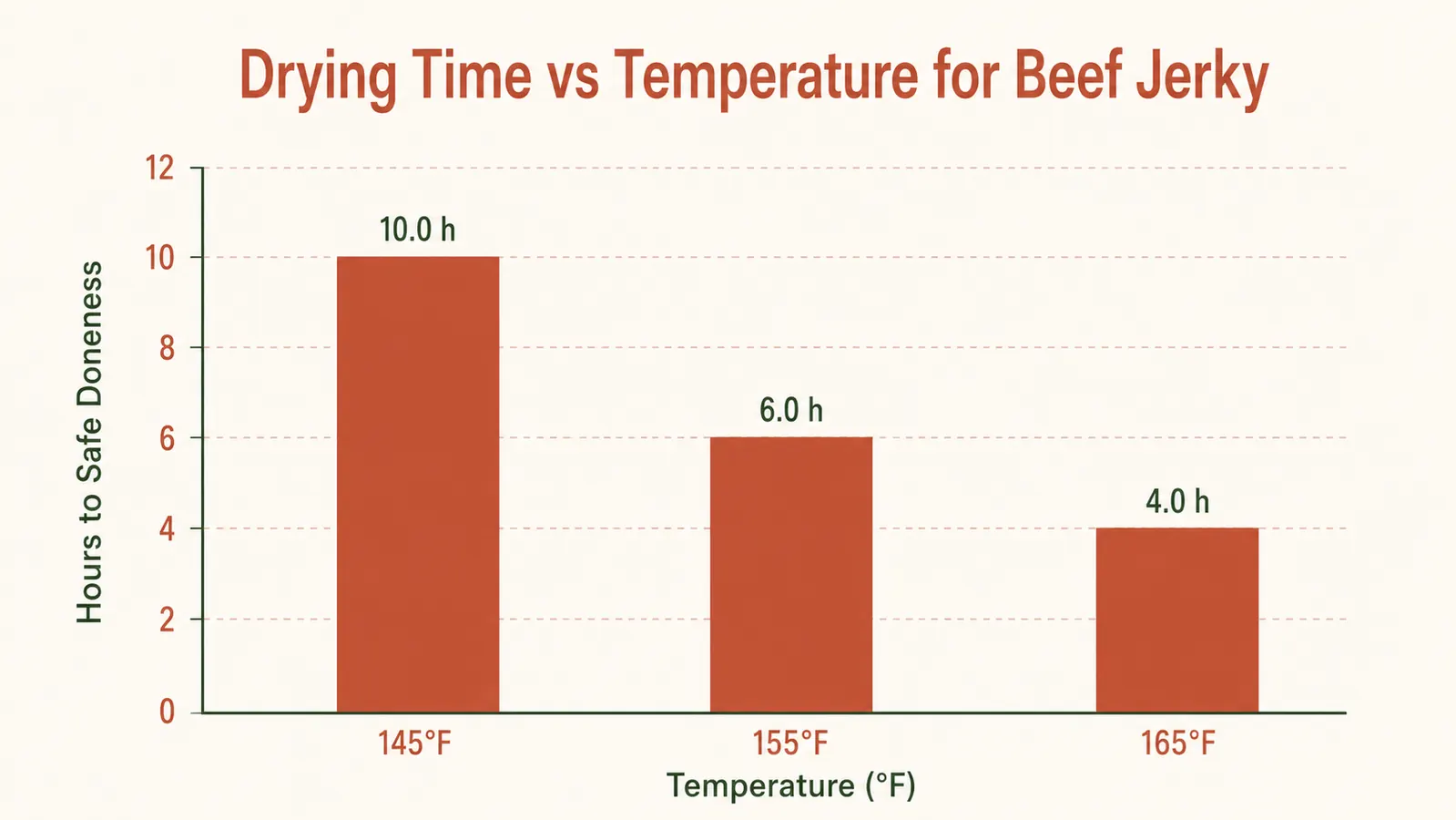
Here's the food safety detail that matters more than any marinade recipe: beef needs to reach an internal temperature of 160°F at some point in the process to kill bacteria like E. coli and Salmonella, and a dehydrator's low, steady heat alone won't reliably get there in every model. This is exactly why I chose the Cosori, its highest setting runs to 165°F, five degrees past the USDA's 160°F minimum for meat, so a full drying cycle on that setting does the job instead of just crisping the surface and leaving the center undercooked. A lot of the cheaper dehydrators I looked at before buying this one topped out around 155°F, and that's the kind of spec that looks fine on a box but actually matters once raw meat is involved.
Some people pre-heat their marinated strips in a 275°F oven for 10 minutes before loading the dehydrator, which is a fine extra step if your dehydrator tops out below 160°F. With the Cosori running its full 165°F setting for the whole cycle, I skip that step and go straight to loading the trays, but if you're using a dehydrator that only reaches 145°F or 150°F, don't skip the oven pre-heat. It's a five-minute step that closes a real gap between 'looks done' and 'is actually safe to eat.'
Step 4: Load the Trays the Right Way
I lay the strips flat on the Cosori's five trays with about a quarter inch of space between each piece. Overlapping strips or bunching them tight blocks airflow, and jerky that touches its neighbor dries unevenly, you'll get a soggy strip pressed against a dry one every time. With a full 2-pound batch I usually end up with one tray a little less full than the rest, and I've stopped fighting that, it's better than cramming strips together just to make the trays look even.
I always pat the strips dry with a paper towel before they go on the tray. Excess marinade dripping off the meat pools at the bottom of the unit and adds hours to the drying time for no benefit, since that liquid was never going to soak back in. It also makes cleanup afterward more annoying, because dried marinade at the base of the unit is stickier and harder to wipe out than a few drips on a tray.
One thing I learned the hard way in my first few batches: rotate the trays halfway through the cycle. The Cosori dries pretty evenly front to back thanks to the horizontal airflow design, but the bottom tray still finishes a little faster than the top one in my kitchen, so I swap top and bottom around the halfway mark just to keep everything on the same clock. It takes maybe 30 seconds and it's the difference between five trays finishing together and me picking through the load looking for the last tacky strips an hour after everything else is done.
Step 5: Dry at the Right Temperature and Check for Doneness
I set the Cosori to 165°F and run it for 5 to 6 hours for quarter inch strips, checking at the 4 hour mark and then every 30 minutes after that. Thicker strips or a fuller load across all five trays can push closer to 7 hours, so I treat the timer as a guideline, not a stopwatch. Humidity in my kitchen changes a little season to season too, and I've noticed batches run maybe 20 to 30 minutes longer in the summer than in the winter.
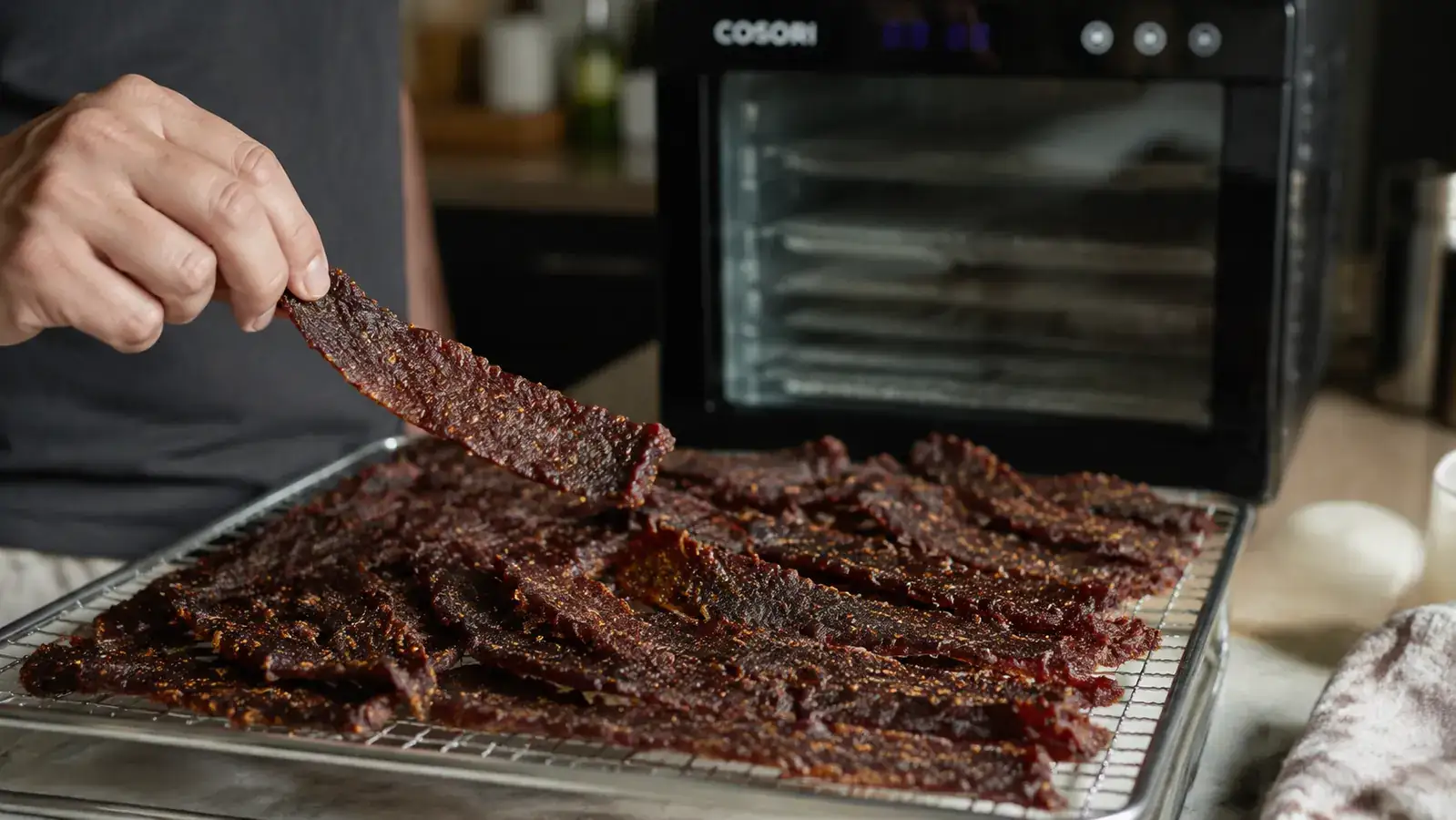
Doneness is a bend test, not a look test. I pull a strip out, let it cool for a minute since warm jerky always feels softer than it actually is, and then bend it. It should crack and show white fibers at the bend without snapping clean in half or feeling rubbery and pliable. Rubbery means it needs more time. I usually pull test strips from two or three different trays, not just one, since that's where uneven loading shows up first.
Once a batch is done, I let it cool completely on the counter, about 15 minutes, before bagging it. Sealing warm jerky traps steam inside the bag, and that trapped moisture is exactly the kind of environment that spoils a batch you just spent five hours making. I store finished jerky in a vacuum-sealed bag in the pantry for up to two weeks, or the fridge for a month if I want it to last longer. If I'm making a bigger batch to give away or bring on a trip, I portion it into smaller bags before sealing so each one only gets opened once instead of being handled and resealed a dozen times.
What Else Helps
A few small things made a bigger difference than I expected. I bought an oven thermometer for about $6 and set it on the middle tray for my first few batches just to confirm the Cosori's display temperature matched the actual air temperature inside, and it was accurate within a couple of degrees, which is part of why I trust the 165°F setting for food safety and not just flavor. I also keep a roll of parchment liners cut to fit the trays for sticky marinades like teriyaki, it saves scrubbing time without blocking airflow the way solid mats can. And if you're batching for a road trip or gifting jerky, doubling the recipe is easy since the Cosori's five trays and 48-hour timer mean you can load it before bed and wake up to a finished batch instead of babysitting a smaller dehydrator through two separate runs. I also run the empty unit for 15 minutes on a low setting after every jerky batch, just to dry out any residual marinade smell before I use it for fruit or herbs next.
The bend test told me more in ten seconds than any timer ever did.
The Dehydrator That Ended My Jerky Bag Habit
Once you've made one batch of jerky that costs about $3 a pound instead of $9, it's hard to go back. The Cosori's 165°F setting, five trays, and 48-hour timer are built for exactly this.
Amazon Check Today's Price on Amazon →