
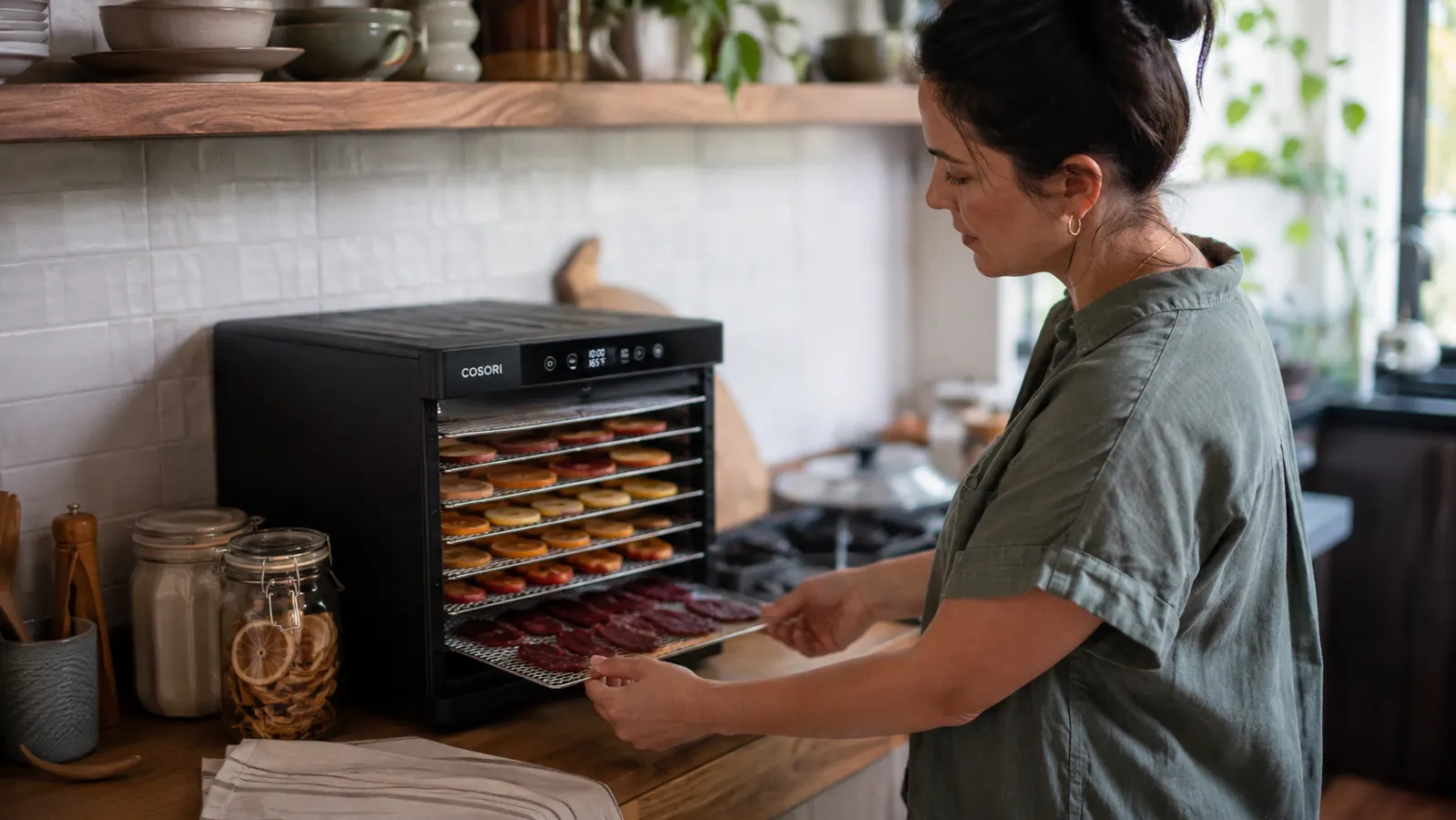
I didn't buy my Cosori Food Dehydrator to save money. I bought it because my neighbor sent home a bag of dried apple rings that tasted better than anything I'd ever grabbed off a shelf, and I wanted to know how she did it. Six months and a lot of batches later, dehydrating food has quietly become one of the cheapest habits in my kitchen. Not dramatic savings. Just steady ones, the kind that add up on a grocery receipt without me noticing until I look back.
The dehydrator itself is a simple machine: five BPA-free trays, a dial that runs from 95F to 165F, and a timer that goes up to 48 hours so you can load it before bed and forget about it. What makes it worth the counter space isn't any one feature. It's what it lets you stop buying at the store, week after week, without me really noticing the shift until I added it up. Here are the ten places I've actually seen the savings show up.
The gadget that quietly cut my snack budget
Five trays, a 165F ceiling for jerky, and a 48-hour timer. This is the dehydrator behind every reason on this list.
Amazon Check Today's Price on Amazon →Buy produce on sale, dry it before it turns
When strawberries or bananas hit a rock-bottom sale price, I used to buy them anyway and watch half of them go soft in the fridge before we finished the bag. Now I buy the sale flat, slice what we won't eat in two days, and load a tray that same evening. Sale-price produce that would have gone straight to the compost bin becomes weeks of shelf-stable snacks instead of a loss I quietly absorbed every couple of weeks. The long-term review has my exact slicing and loading routine, tray by tray.
Homemade jerky costs a fraction of the bag at the register
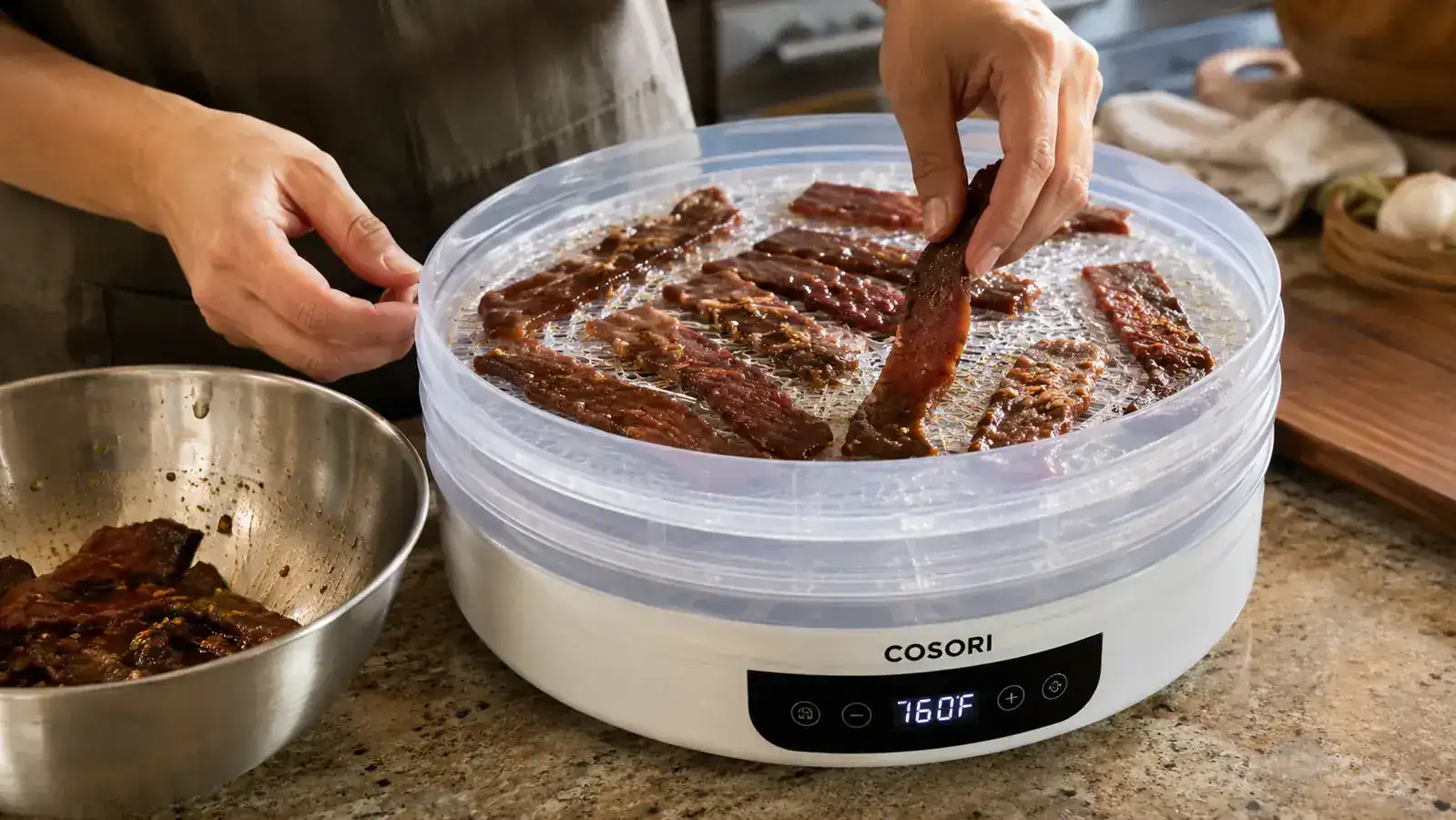
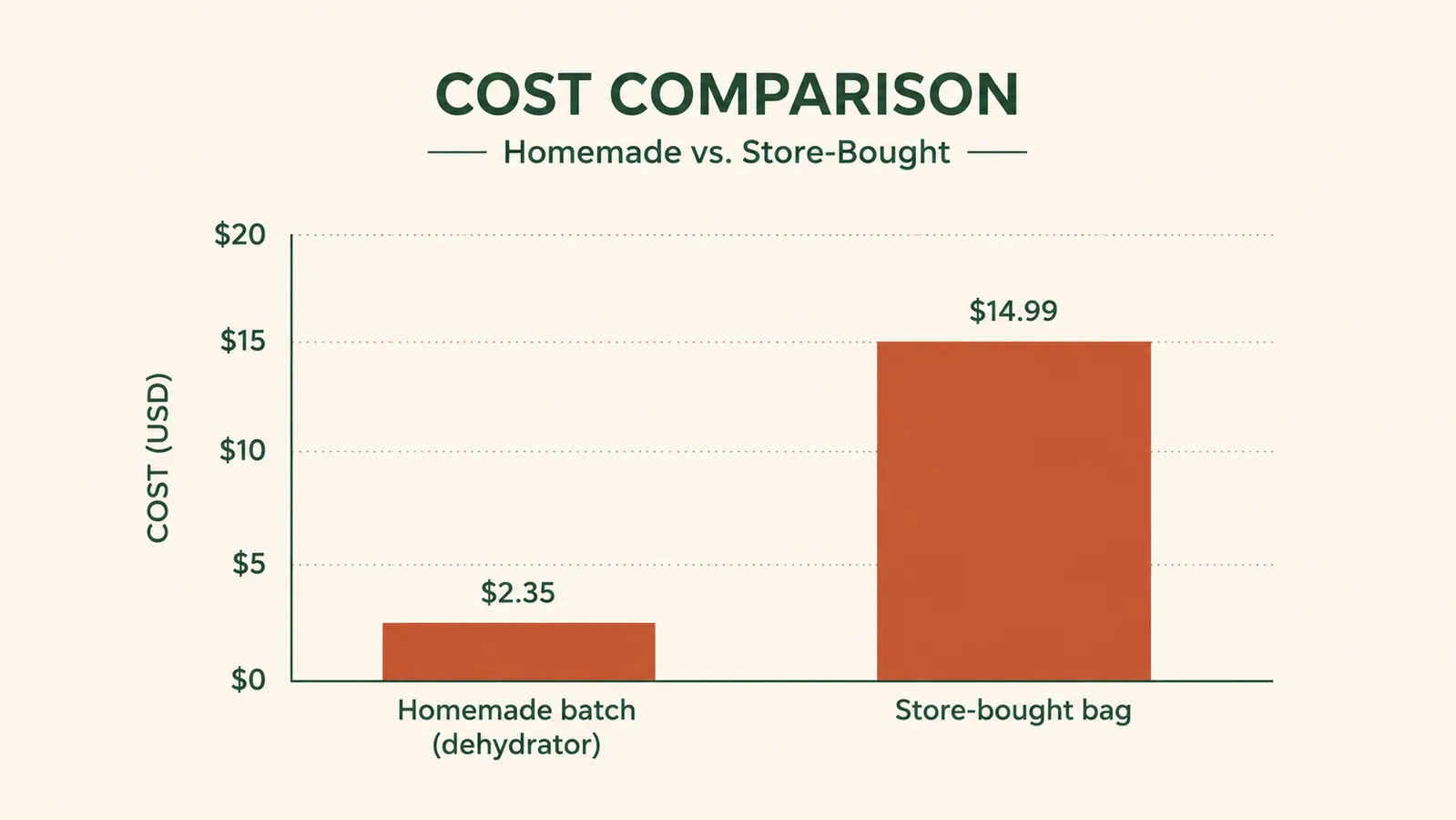
A bag of name-brand beef jerky at my grocery store runs close to nine dollars for a couple ounces, and it disappears from my kids' backpacks in a day. I can run a full batch of trimmed, marinated flank steak through the Cosori for about the cost of the meat itself, and it fills every one of the five trays at once. Once you've made your own, the gas-station bag stops feeling worth it at all. My full jerky walkthrough covers marinade ratios, slice thickness, and drying time start to finish.
It shrinks food waste, which shrinks your real grocery bill
The USDA estimates the average household throws out a meaningful chunk of the produce it buys, and honestly our old numbers were probably worse than average. In my kitchen, that used to be soft peppers, browning mushrooms, and herbs that wilted before we got to them. A quick run through the dehydrator turns near-waste into something we'll actually use later, which means we're not effectively paying twice for the same vegetable, once at checkout and once when it hits the trash.
Kids' fruit snack pouches get expensive fast
My daughter goes through those little fruit strip pouches like they're free, and at close to five dollars a box, they're not. A tray of thin-sliced apples or mango run at 135F for about eight hours makes a batch that lasts her the better part of two weeks, for less than the cost of one box of the store version. She genuinely likes them more than the packaged ones, which is the part I didn't expect.
Garden herbs stop going to waste at the end of the season
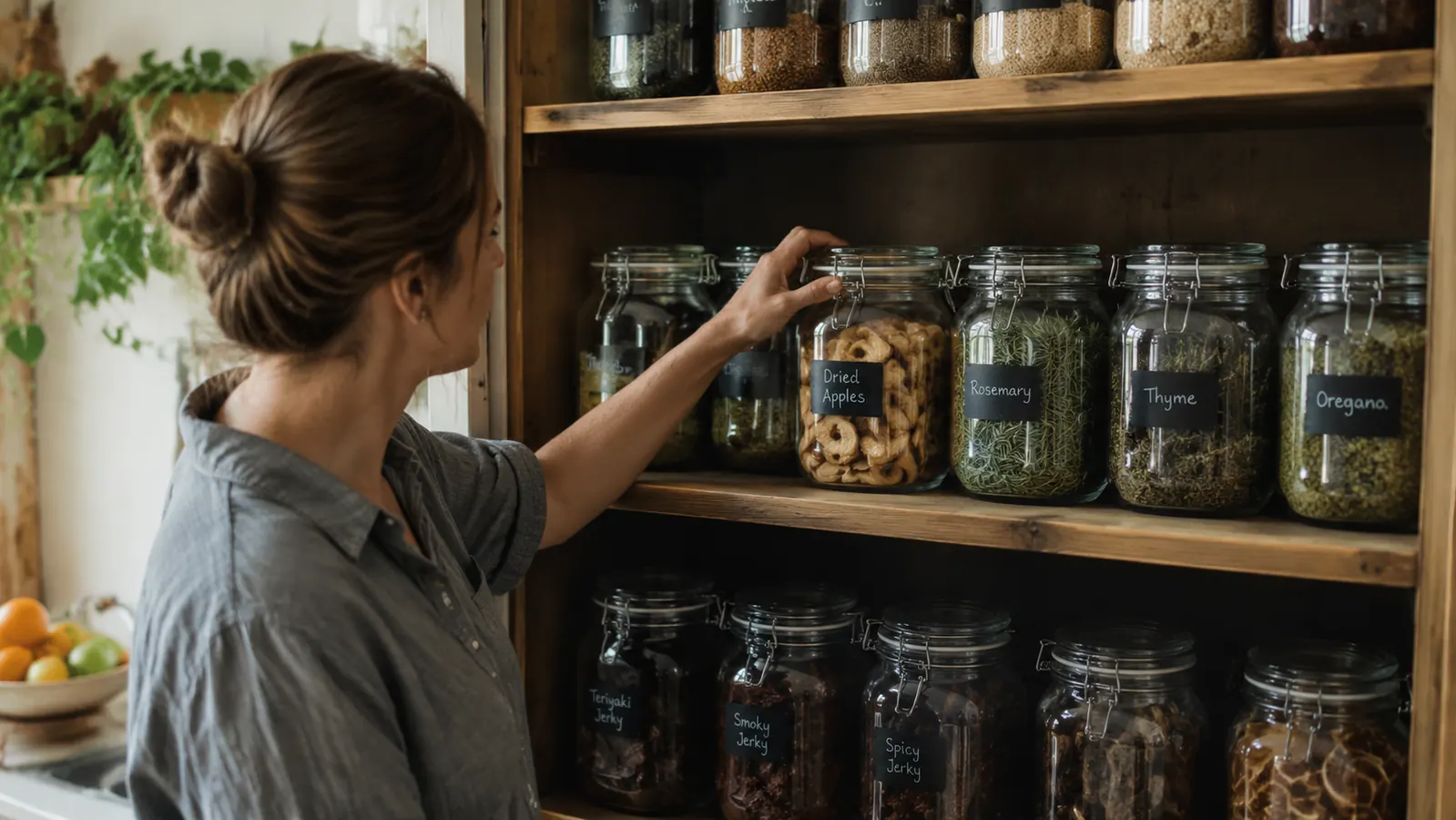
Every fall I used to watch half my basil and oregano bolt or brown before I could use it fresh, which always felt like throwing money straight into the flower bed. Now it goes right onto a tray at the lowest setting and comes out as jarred seasoning that carries us through winter without a single trip to the spice aisle. It's a small line item on paper, but it's one I no longer pay every January.
Camping and road trip food gets cheap instead of freeze-dried expensive
Freeze-dried backpacking meals can run eight to twelve dollars a pouch, and a family trip can burn through a dozen of them without much effort. I make our trail mix, dried fruit, and jerky at home the week before a trip and pack it in reused containers. Same convenience on the trail, a fraction of the cost at checkout, and I know exactly what went into every bag.
Vegetable scraps become broth powder instead of trash
Onion skins, celery ends, carrot peels, the stuff that usually goes straight into the compost or the trash. Dried on a low setting and blitzed into a powder, they make a genuinely solid base for soup broth and rice seasoning. It's a small habit, but it's free flavor pulled from food I was already paying for and throwing away without a second thought.
Bulk spice blends replace pricier pre-made mixes
Once dried tomatoes, peppers, and garlic are on hand from a big batch, mixing your own seasoning blends costs almost nothing compared to the specialty jars at the grocery store checkout aisle. I keep a rotation of three or four house blends now, taco seasoning included, instead of buying the boutique versions every time we run low.
Long shelf life means fewer emergency store runs
Dehydrated food stored in a sealed jar lasts months, sometimes closer to a year if it's kept cool and dry. That means fewer last-minute trips for snacks or soup add-ins, which sounds minor until you add up how much an impulse gas-station run actually costs over the course of a full year of small stops.
The machine pays for itself in a handful of batches
Between the jerky, the fruit snacks, and the herbs, our household covered the cost of the Cosori in roughly a month of normal use, maybe less once I counted the trips to the store we skipped entirely. Everything after that first month is savings we'd otherwise be quietly handing to the snack aisle every single week.
What I'd Skip
I wouldn't bother dehydrating anything with high water content in a single thick piece, like whole tomatoes or zucchini rounds cut too thick. They take forever to finish and the payoff isn't there compared to slicing thin and spreading trays out evenly. I'd also skip trying to dry fatty cuts of meat for jerky, no matter how good the cut looks at the counter. The fat doesn't dehydrate the same way lean muscle does, and it shortens how long the finished batch actually keeps in the pantry. Stick to lean trims and thin, even slices and the savings on this list hold up over time.
The dehydrator didn't change what I cook. It changed what I stop throwing away.
Turn your next grocery trip into fewer future ones
Five trays, a 165F setting built for jerky, and a 48-hour timer that runs while you sleep. See why it earned permanent counter space in my kitchen.
Amazon Check Today's Price on Amazon →