
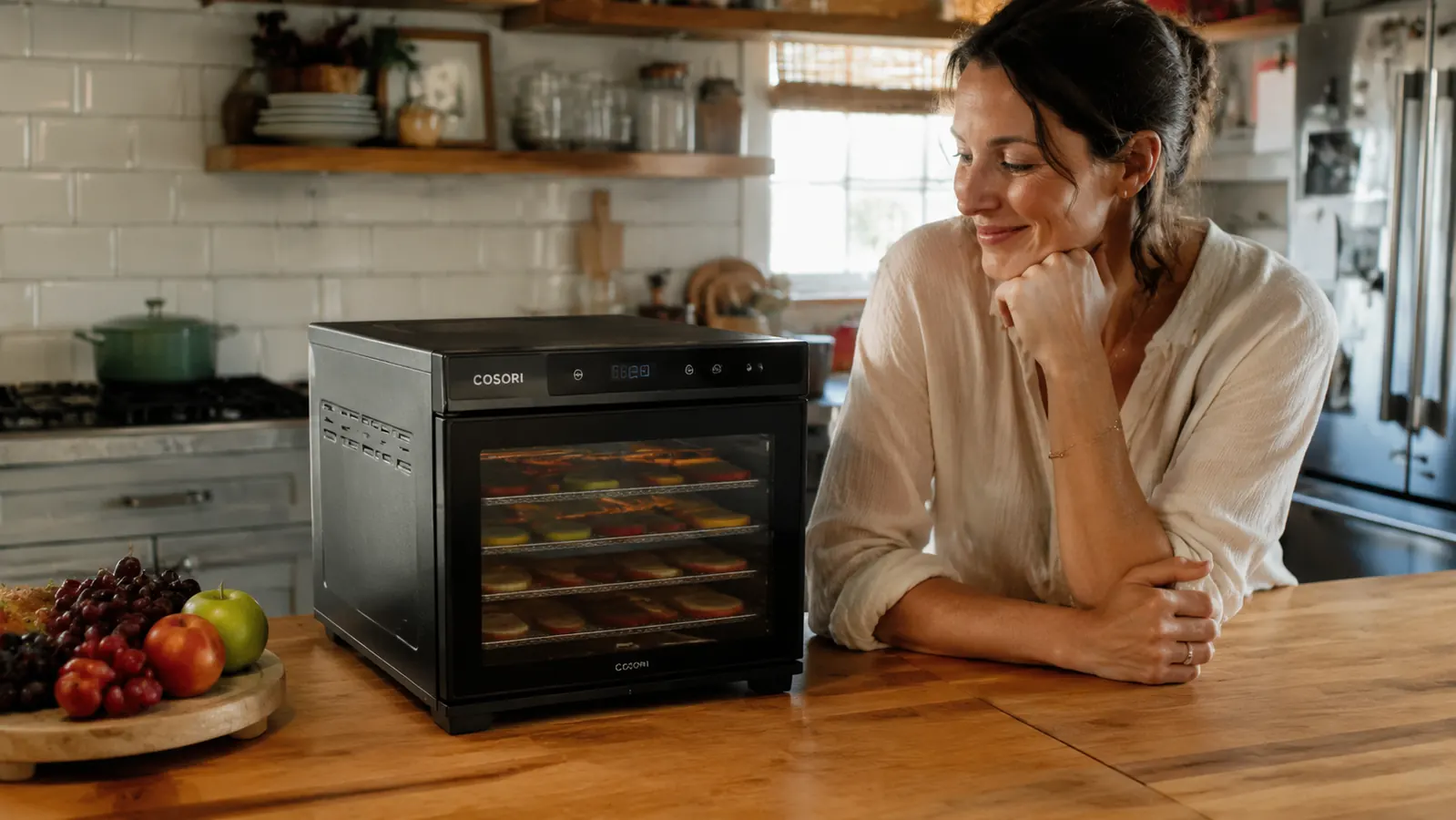
I bought the Cosori Food Dehydrator in January because my husband Mike was buying $9 bags of beef jerky from the gas station on his way to work, sometimes two a week, and I did the math on that out loud one night and he didn't love hearing it. Six months and roughly 40 batches later, the Cosori sits on my counter between the coffee grinder and the toaster, and it gets used more than either of them.
This isn't a lab review. I'm not measuring water activity with a meter or running side-by-side thermal scans. I'm a home cook who dries five pounds of flank steak jerky most Sundays, fills the five Cosori trays with apple chips when our backyard tree drops more fruit than we can eat, and pulls basil and oregano off the stalks before frost and turns them into jars of dried herbs that last through winter. That's the lens this review comes from, and it's the same lens I'd want from a friend before spending $50 on a countertop appliance I hadn't touched or heard hum in person.
The Quick Verdict
A genuinely useful $50 appliance if you'll actually use it weekly. The 165°F ceiling and simple digital timer cover jerky, fruit, and herbs without fuss, though the five trays run tight on big batches.
Amazon Check Today's Price →Tired of Paying $9 a Bag for Jerky That's Half Filler?
The Cosori Food Dehydrator turns a $6 flank steak into a week of jerky for less than one gas station bag costs. Check today's price and see why it's rated 4.7 stars across 28,000+ reviews.
Amazon Check Today's Price on Amazon →How I've Used It
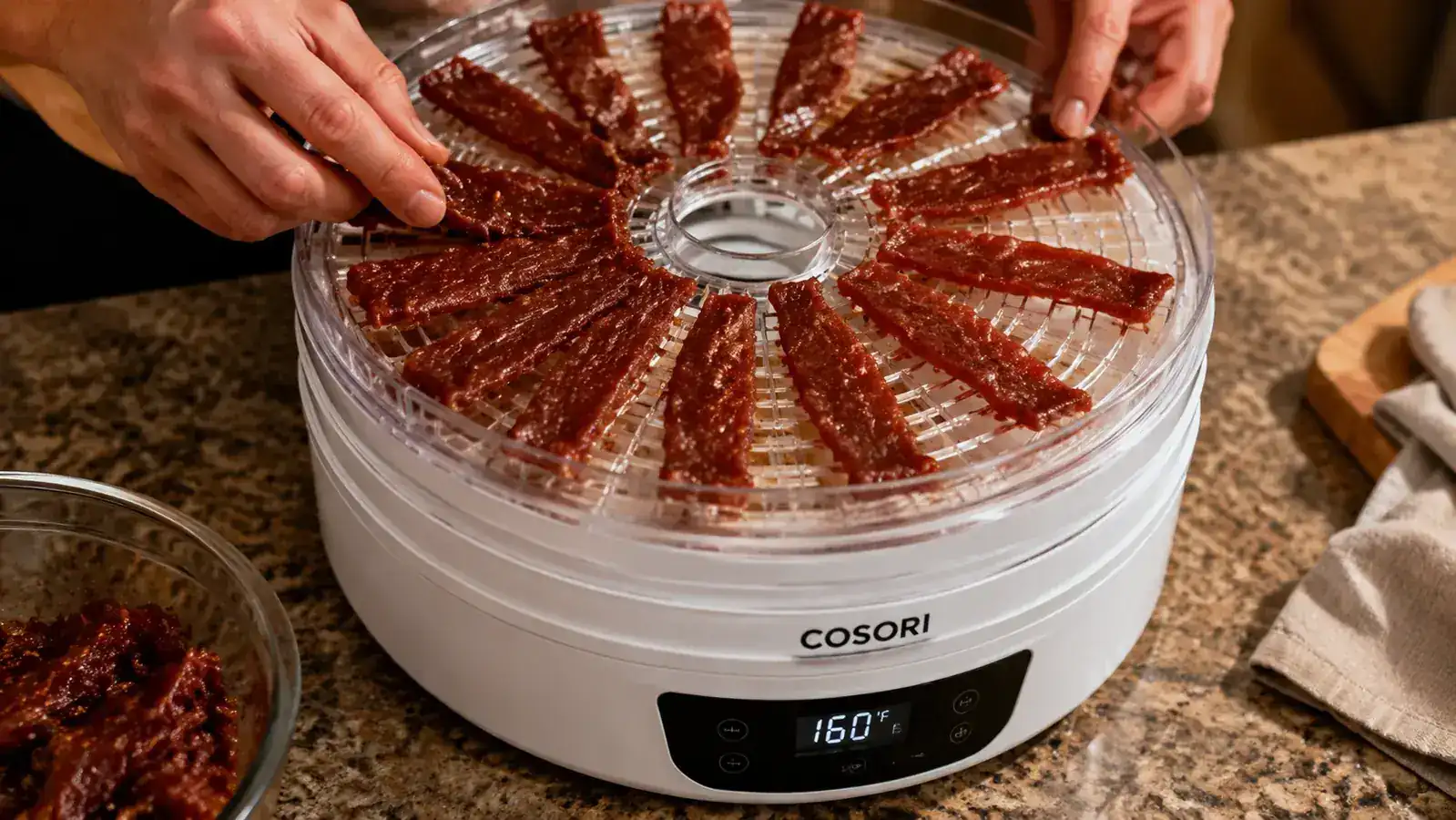
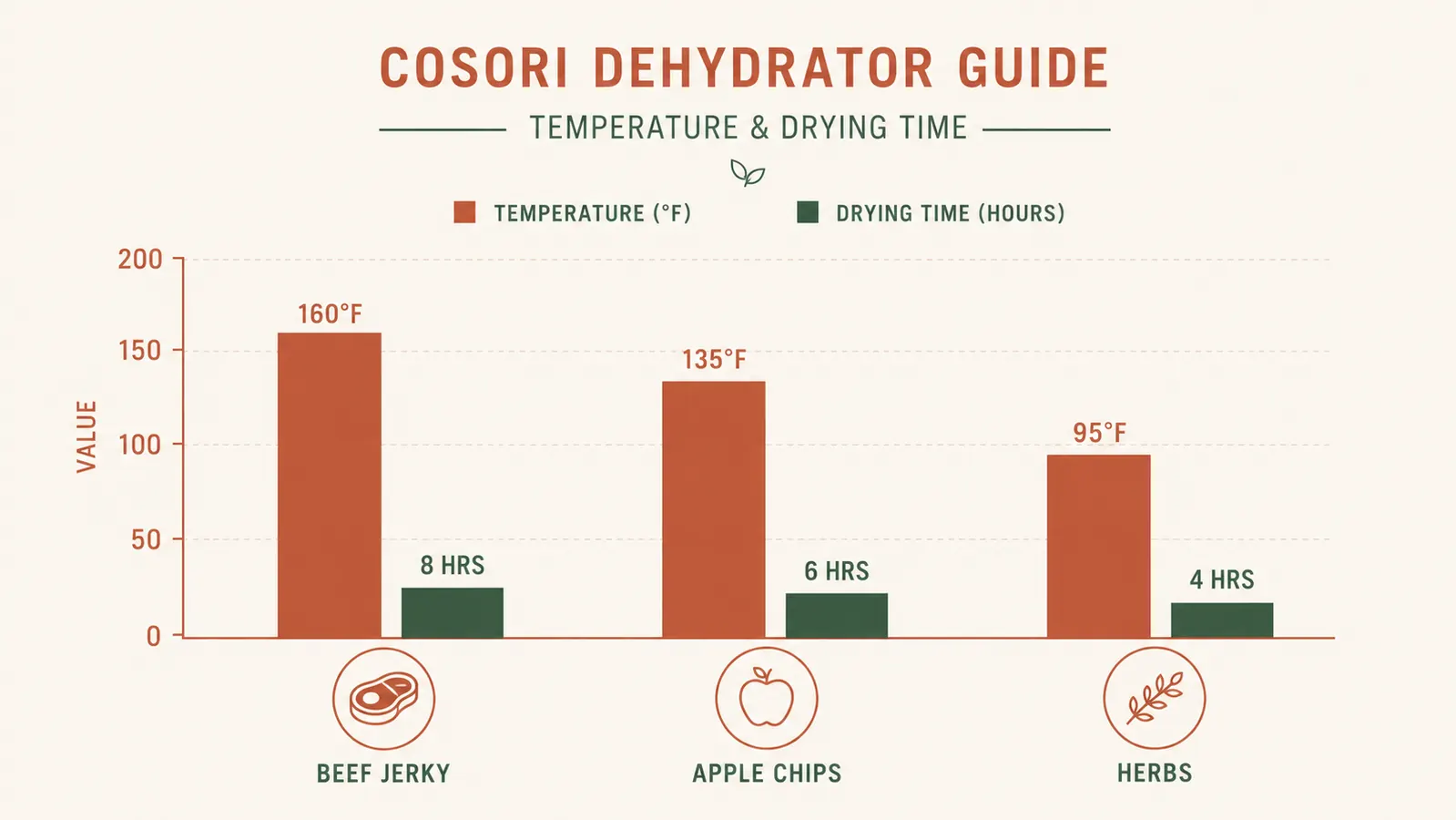
My routine settled into a pattern by the second month. Sunday mornings, I marinate two pounds of flank steak overnight in soy sauce, brown sugar, and black pepper, slice it against the grain, and lay it across all five Cosori trays around 9am. By 5pm, sometimes closer to 6, it's done. My kids grab strips for school lunches all week, and it's cheaper and cleaner than anything from a bag, with no mystery preservatives on the ingredient label because I wrote the ingredient label myself, in my own kitchen.
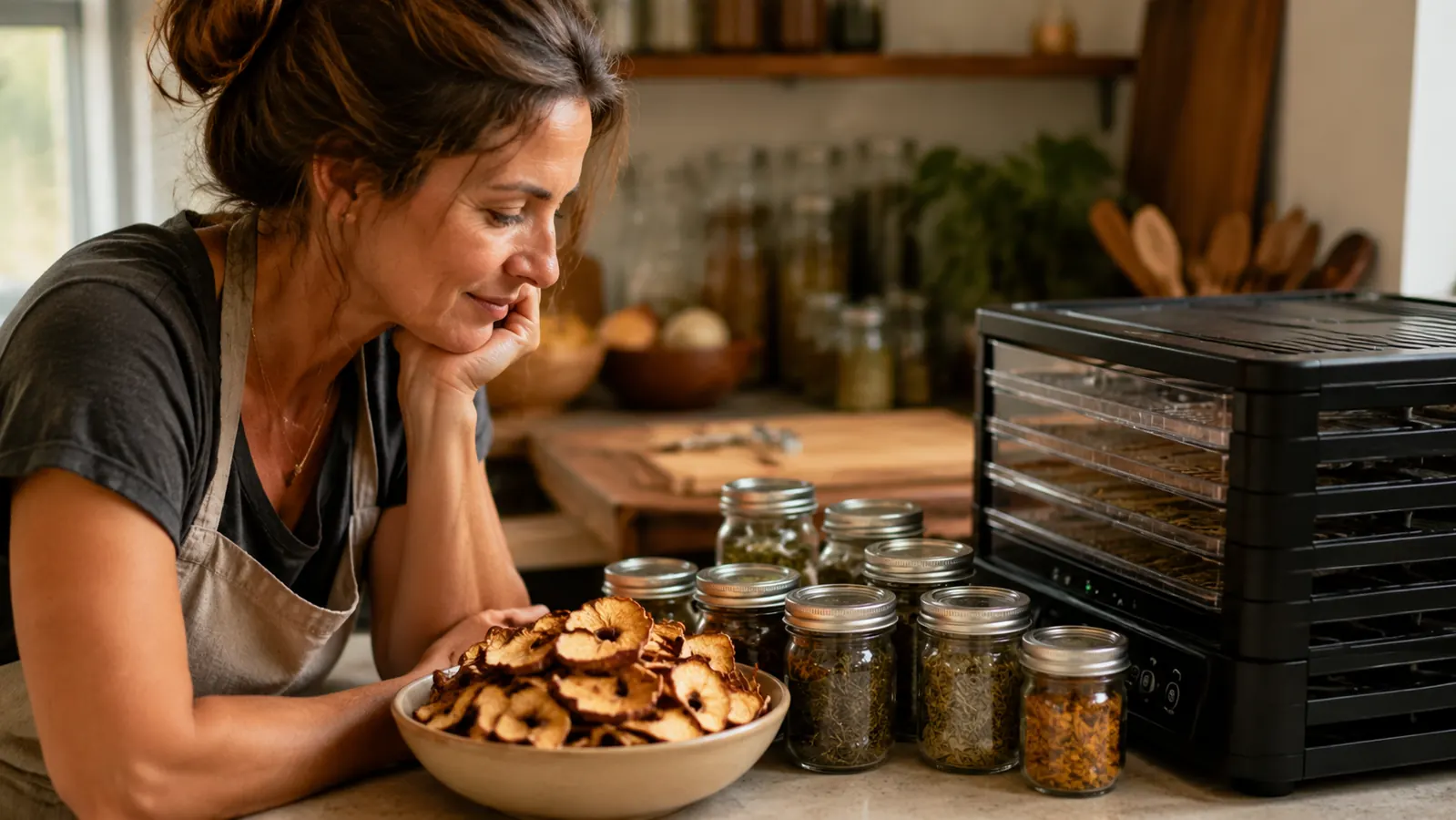
Apple season is where the Cosori earns its keep differently. We have one Honeycrisp tree in the backyard that drops more fruit than four people can eat fresh, so every few days in September and October I core and slice a bowl of apples thin, dust them with cinnamon, and run a six hour batch at 135°F. The kids eat the results like chips, and I don't feel bad about that the way I would with the bagged stuff loaded with added sugar. Before the Cosori, half of that fruit went straight into the compost bin, which always bothered me more than it should have.
The third use, herbs, is the one I didn't expect to matter as much as it does. I grow basil, oregano, and mint in pots on the patio, and before the first frost each fall I strip the leaves, spread them across two trays, and run the Cosori at its lowest setting, 95°F, for about four hours. What comes out crumbles into jars that last us until spring. That alone probably saves us $30 or $40 a year in dried spice jars from the grocery store, and it tastes noticeably fresher than anything off a store shelf that's been sitting in a jar since who knows when.
Every so often I'll do a smaller batch of something unplanned, sliced mushrooms before they go soft in the fridge, or leftover citrus peel for tea, just to see what the Cosori does with it. It's not something I do every week, but having the option sitting right there on the counter, already plugged in, has quietly cut down on how much produce we throw away. My weekly grocery waste is noticeably smaller than it was a year ago, and I credit the dehydrator for a real share of that.
Dialing In the 165°F Range
The Cosori's temperature dial runs from 95°F to 165°F in 5-degree increments, and that range covers everything I've thrown at it. Jerky wants 160°F for food safety, herbs and delicate greens want the low end so they don't scorch, and fruit sits comfortably in the middle. I've used dehydrators before, a cheap round stackable one I had in my twenties, where the temperature was basically a single 'on' setting and you guessed at doneness by poking at slices every hour. Having an actual number to dial in changed how consistent my batches turned out.
I tested the temperature against an oven thermometer laid on the middle tray during a jerky run, mostly out of curiosity, and it read within about 4 degrees of the dial setting, close enough for food safety purposes. It's not a lab-grade instrument, but it's accurate enough that I trust it with raw meat, which is the one place accuracy actually matters to me. I've since run the same test twice more with different tray positions, and the readings stayed consistent within that same small margin.
The 48-hour timer is generous for what I actually need, since even my longest herb batches finish in under 8 hours, but I've read that people making dehydrated tomatoes or thin-sliced sweet potatoes lean on the longer window. I haven't needed it myself, but it's there and it shuts off on its own instead of running until you remember to check it, which matters more than it sounds like it would at 11pm when you've already gone to bed and forgotten the machine was even on.
Six Months of Batches: What Held Up
The trays are BPA-free plastic, five of them, and after roughly 40 batches they still look close to new. No cracking, no warping from heat, no lingering smell beyond the very first run, which did have a faint plastic odor that aired out after a couple of uses with the door open on the porch. I run them through the dishwasher top rack most weeks, though jerky marinade residue sometimes needs a hand scrub with hot soapy water first before it goes in.
The fan is louder than I expected going in, closer to a box fan on low than the near-silent hum I'd hoped for, and I've learned not to run it overnight in the kitchen if anyone's sleeping nearby, since our house has an open floor plan and sound travels straight up the stairs. During the day it's background noise I've stopped noticing, but it's worth knowing before you plan a midnight jerky run and expect the house to stay quiet.
The one mechanical hiccup in six months was a tray that didn't seat evenly after a drop, which I noticed let a little more heat escape from one side. It still worked fine, dried a touch unevenly on that tray until I rotated it partway through a batch, which the Cosori's instructions actually recommend doing regardless for the most even results. Nothing about the base unit itself, the fan, the heating element, or the digital controls has shown any sign of wear.
I've also started tracking roughly what each jerky batch costs versus buying it, since Mike asked me to prove my own math. A two pound cut of flank steak runs about $12 to $14 depending on the week, plus pennies of soy sauce and spices, and yields close to a pound of finished jerky, which would run $25 to $30 in gas station bags at that size. Even accounting for the electricity to run the Cosori for eight hours, which is a few cents at our utility rate, we're saving somewhere close to half the cost of buying it, every single batch.
Tradeoffs I Didn't Expect
Five trays sounds like plenty until you're trying to dry a full five pounds of jerky at once for a holiday gathering. I've had to run back-to-back batches twice, once for a family reunion, because the trays simply don't hold that much meat in a single layer without overlapping strips, which slows drying and risks uneven results. If you're feeding a crowd regularly, the extra trays on something like the Magic Mill Pro start to look appealing, even at the higher cost.
The footprint is bigger than I pictured from the product photos. It's roughly the size of a large stand mixer box, and it lives on my counter permanently now because I didn't want to store and haul out something that heavy every week. If counter space is already tight in your kitchen, measure before you buy, because this isn't a slide-into-the-cabinet appliance you'll want to pull out only occasionally.
The Magic Mill and Other Options I Considered First
Before I bought the Cosori, I nearly went with the Magic Mill Pro, which has nine trays and a stainless steel body instead of plastic. It's a genuinely nicer-looking machine and would have solved my batch-size gripe, but it also runs close to double the Cosori's current price and takes up noticeably more counter space, which mattered more to me once I actually measured my own kitchen counter with a tape measure and realized how little clearance I had left.
I also looked at a couple of the unbranded round stackable dehydrators that show up cheap on Amazon, the kind I owned years ago. They're fine for herbs and light snacking, but the lack of even airflow between tiers means you're rotating trays constantly and still getting uneven jerky, the exact problem I was trying to solve in the first place. For the price, the Cosori's rectangular tray design with a rear-mounted fan felt like the better engineered option, even if it isn't the absolute cheapest thing on the page.
A neighbor of mine ended up buying the Magic Mill after seeing mine in action, and we've compared notes a few times since. Her batches dry a little faster with the extra airflow of nine trays, and she can fit a genuinely large batch in one pass, but she's also mentioned the trays are heavier to lift out and the whole unit takes up a spot on her counter she says she sometimes resents. Neither of us feels like we picked wrong, we just picked for different kitchens and different batch sizes, which is probably the honest takeaway if you're choosing between the two.
What I Liked
- 165°F max temperature hits every setting I actually need for jerky, fruit, and herbs
- Digital timer up to 48 hours shuts off automatically
- Five BPA-free trays clean up fine in the dishwasher
- Temperature held within a few degrees of the dial setting in my own oven-thermometer test
- Rated 4.7 stars across more than 28,000 reviews, which matched my own experience
Where It Falls Short
- Fan noise is more like a box fan on low than a quiet hum
- Five trays run tight for large batches, expect to run back-to-back loads for a crowd
- Faint plastic smell on the very first run
- Footprint is bigger than the product photos suggest, plan real counter space
Six months in, the Cosori isn't the appliance I use every day. It's the one that quietly saved us more money than anything else on the counter.
Who This Is For
If you're already buying jerky, dried fruit, or dried herbs regularly, the math works fast. A $9 bag of gas station jerky versus a $6 cut of flank steak that yields roughly the same amount, run through an appliance that costs less than three months of that habit, pays for itself before the first season of apples even drops. It's also a good fit if you garden and hate watching basil bolt and go to waste every August, or if you're the type who hates seeing produce go soft in the crisper drawer before anyone gets to it.
Who Should Skip It
If your kitchen counter is already full, or you'd only use this two or three times a year, I'd skip it or borrow a friend's before buying. The trays and footprint want a permanent home, not a once-a-season pull from a top cabinet shelf, and an appliance that lives in storage doesn't save anyone money, no matter how good the jerky comes out the one weekend a year you remember it exists.
Ready to Stop Restocking Jerky at the Gas Station?
Six months and 40 batches later, the Cosori Food Dehydrator earned its permanent spot on my counter. Check today's price on Amazon and see the current rating for yourself.
Amazon Check Today's Price on Amazon →