
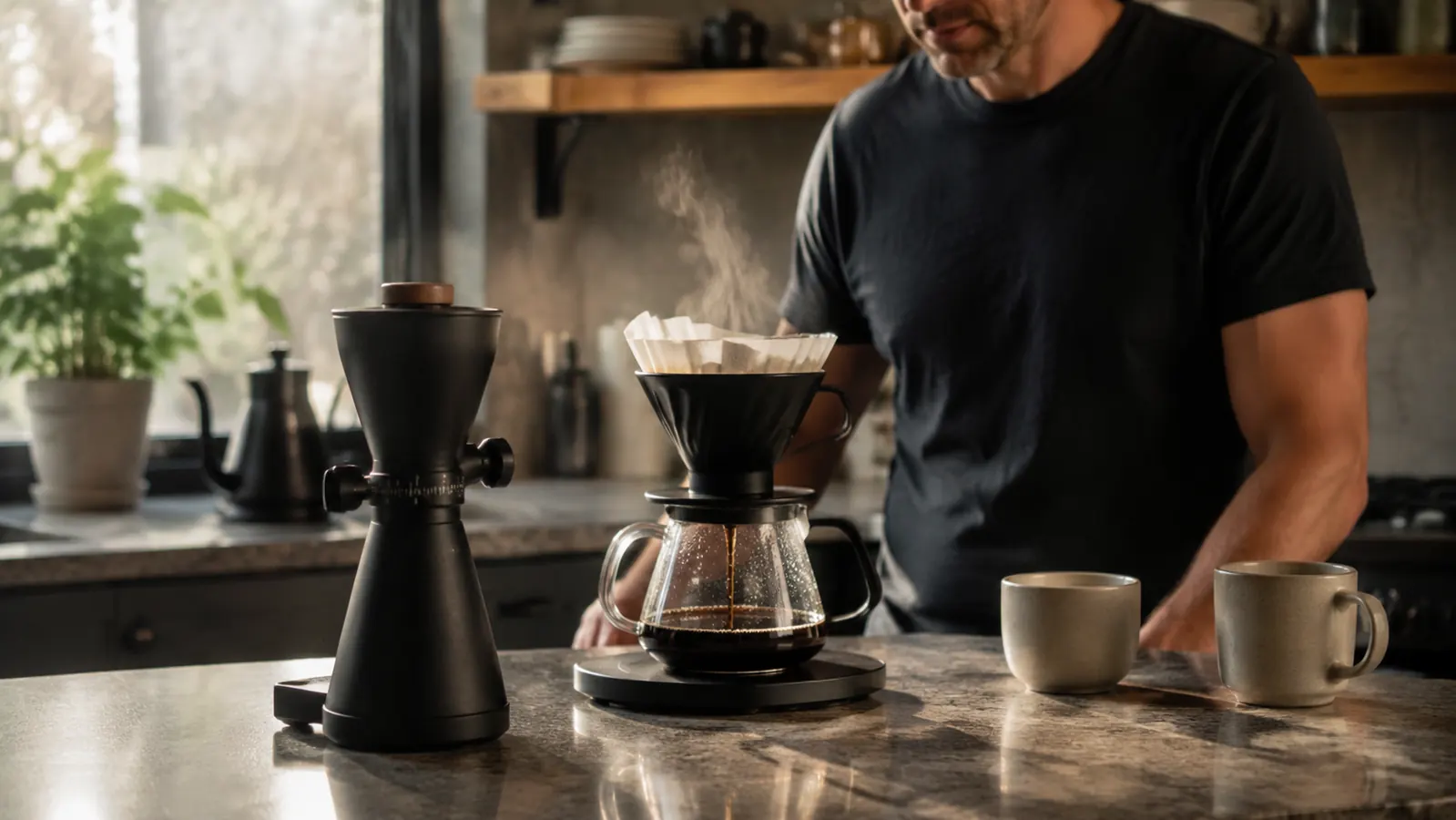
For three years I ground coffee with a blade grinder that came free with a drip machine, and every cup tasted a little different depending on how long I pulsed it. Then I swapped in an OXO Brew Conical Burr Grinder, matte black, sitting right next to the sink, and the difference showed up in the cup within a week. A burr grinder crushes beans between two revolving surfaces instead of hacking them into random shrapnel, and that one mechanical difference changes almost everything downstream.
I'm not going to pretend a burr grinder is required to make a decent cup of coffee. Plenty of people get by fine with a blade grinder and a French press. But if you've ever wondered why your coffee tastes bitter one day and sour the next, the grinder is usually the reason, and here's what changed once mine had burrs instead of a spinning blade.
Stop Guessing at Your Grind Size
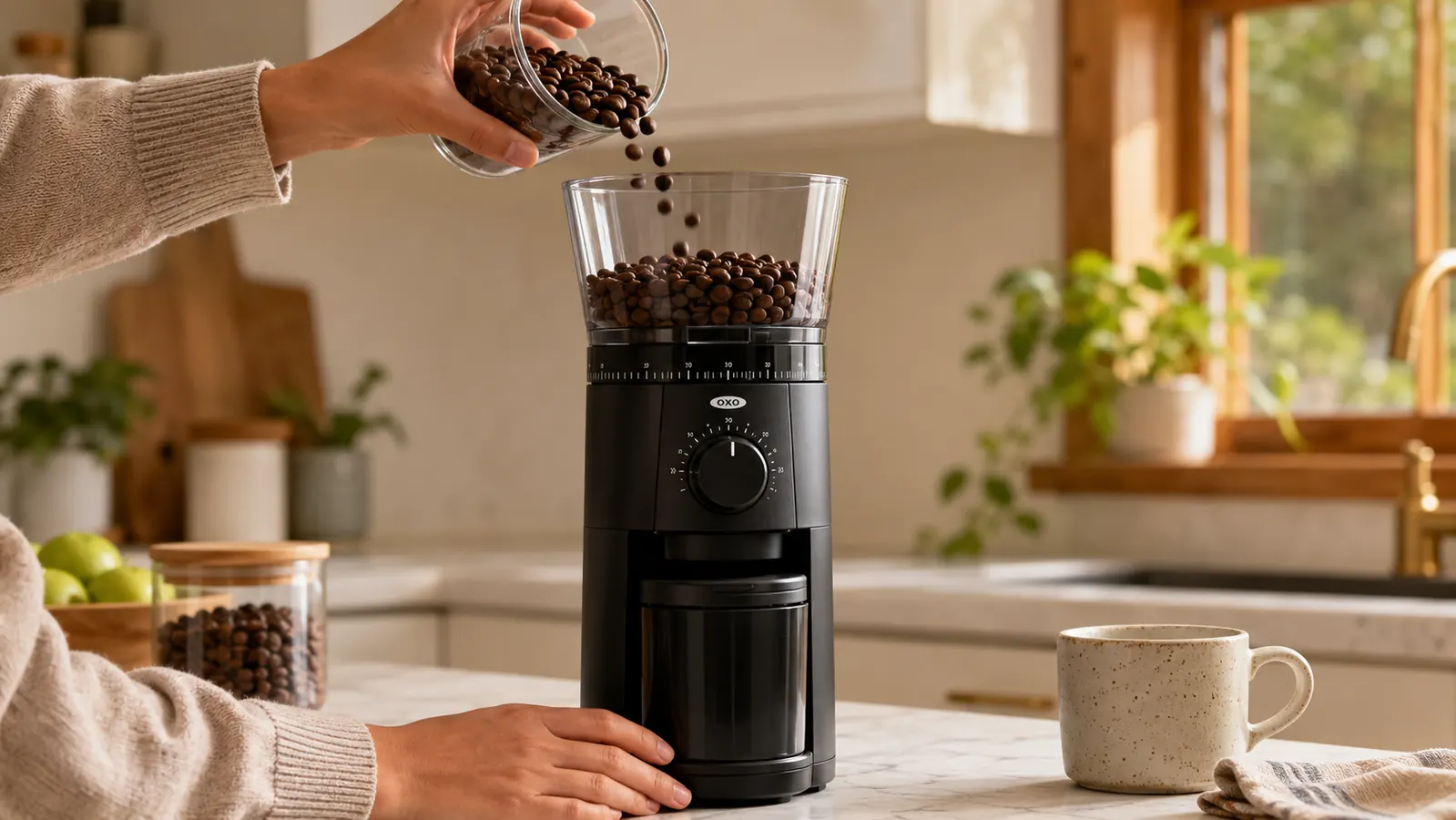
The OXO Brew Conical Burr Grinder handles the one variable that quietly wrecks most home coffee: an uneven grind. Forty settings, a one-touch smart grind sensor, and stainless steel burrs that don't dull.
Amazon Check Today's Price on Amazon →Even Grind Size, Every Time
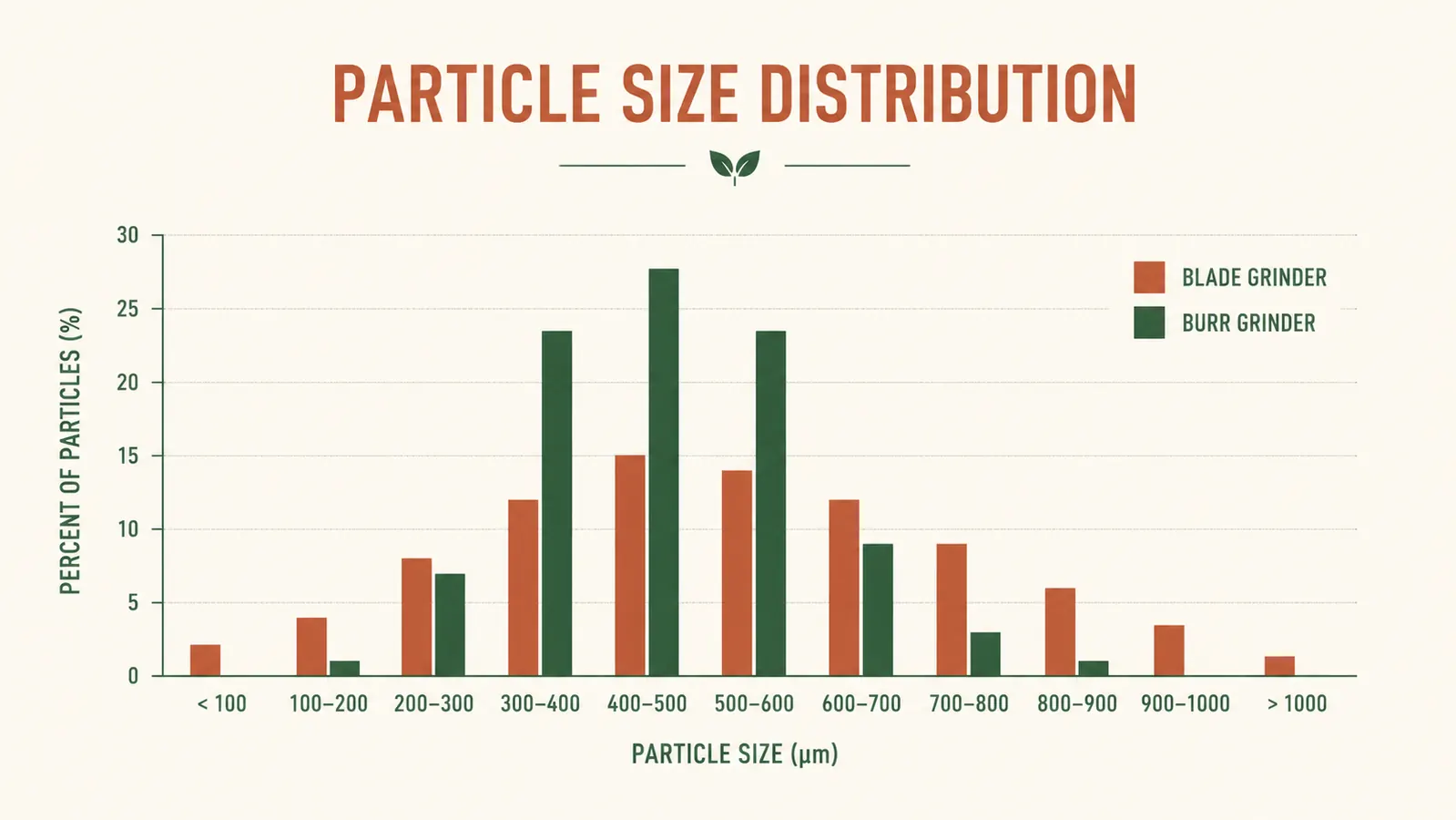
A blade grinder chops beans into a mix of powder and boulders no matter how carefully you pulse it, because there's no way to control particle size with a spinning blade bouncing beans around a chamber. The conical burrs inside the OXO Brew Conical Burr Grinder crush beans between two fixed surfaces set at a specific gap, so every particle comes out close to the same size. That matters more than most people realize. Uneven grounds mean some particles over-extract and turn bitter while the bigger chunks under-extract and taste sour, so you end up with a cup that's somehow both flavors at once. Even grind size is the single biggest reason burr coffee tastes cleaner.
You Can Actually Dial In a Grind Size
Blade grinders give you one variable: how long you hold the button down. Burr grinders give you an actual dial, and on mine that's 40 settings running from a fine espresso grind to a coarse French press grind. I switch mine between a fine setting for pour-over and a coarser setting when my mother-in-law brings her percolator over on Sundays, and both cups come out right. If you brew more than one way, a fixed blade just can't keep up. Dialing in the right grind size for each method took me about a week of testing.
Less Heat, More Flavor
Blade grinders spin fast enough to generate real friction heat, and that heat starts cooking off the volatile oils that carry most of a coffee's flavor before it ever hits water. Burr grinders crush rather than chop, so the beans move through at a slower, cooler pace. I noticed the smell difference first, my kitchen actually smells like fresh coffee now instead of faintly scorched. The oils that used to bake off in the grinder end up in the cup instead.
One-Touch Dosing Instead of Eyeballing It
My old routine involved a scoop I never trusted and a lot of guessing. The OXO's smart grind sensor measures by weight, not time, so I punch in how many cups I want and it stops itself. No more grinding for 8 seconds one morning and 11 the next because my arm got tired. That single feature probably did more for consistency in my house than anything else on this list.
Way Less Static and Mess
Blade grinders kick up a static charge that sends fine coffee dust jumping onto your counter, your sleeve, and occasionally your ceiling. Burr grinding produces far less static because the grounds fall straight down through the burr chamber into the catch bin instead of getting whipped around in open air. My counter next to the grinder used to need a wipe-down every single morning. Now it's maybe once a week.
Wider Range for Different Brew Methods
I brew pour-over most mornings, but I also own a French press and, once a year around the holidays, a percolator that belonged to my grandmother. A blade grinder can sort of manage a coarse grind if you pulse it carefully, but it has no real business making espresso-fine grounds. A conical burr grinder covers the whole range, from espresso to cold brew, on the same machine. That's one gadget doing the job that used to require different tricks for different pots.
The Burrs Don't Dull Like a Blade Does
A spinning steel blade gets nicked and dulled the same way a kitchen knife does, and once it dulls, your grind gets even less consistent than it started. The stainless steel conical burrs in a grinder like the OXO Brew are built to hold their edge for years of daily grinding, not months. Mine has been running every morning for five months and the grind still looks the same as day one.
Quieter, More Predictable Grind Cycles
Blade grinders make an angry buzzing pulse that always sounds like it's about to grind through the housing. My burr grinder runs at a lower, steadier pitch and finishes on its own schedule instead of me standing there pulsing a button and guessing when it's done. It's not silent, coffee grinders never are, but it's a sound I can run at 6am without waking anyone up two rooms over.
It Actually Extracts Better, Not Just Grinds Finer
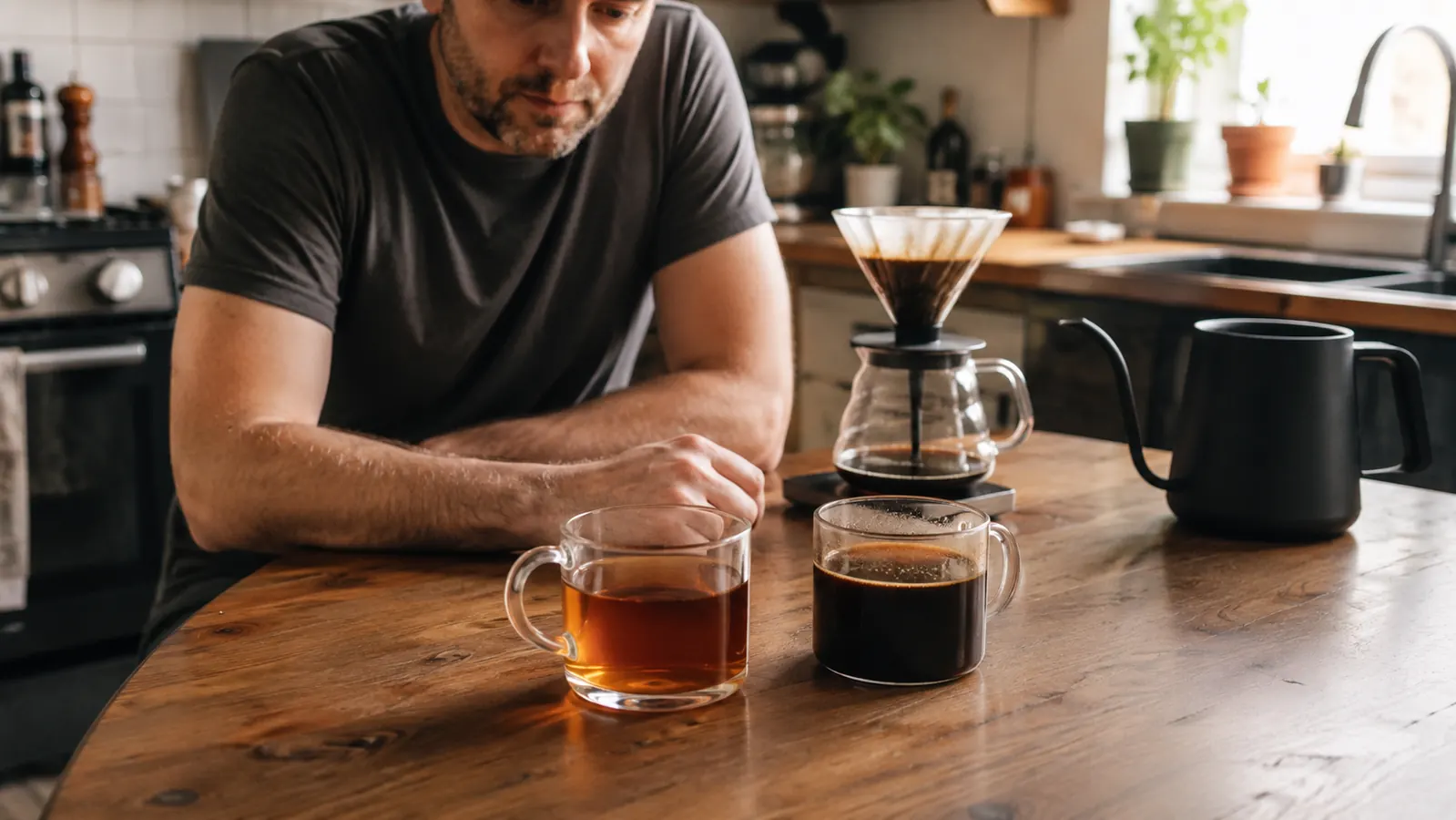
Grind consistency isn't a vanity metric, it directly controls extraction, which is the technical word for how much flavor actually makes it out of the bean and into your cup. Uniform burr grounds extract evenly, which means the coffee tastes the way the beans were meant to taste instead of a compromise between over and under-extracted particles. Once I switched, I could actually taste differences between bags of beans that used to taste identical through my old blade grinder.
It Pays for Itself in Wasted Coffee
Uneven grounds waste coffee two ways: you either compensate with more grounds to mask the sour undertones, or you throw out cups that taste off and start over. Since switching to the OXO Brew Conical Burr Grinder, I use less coffee per pot and toss almost nothing. At the rate I drink coffee, that adds up to real money over a year, on top of not having to replace a burned-out blade motor every couple of years like I did before.
What I'd Skip
I'll be honest about where a burr grinder isn't worth it. If you only drink instant coffee or already buy pre-ground beans from a local roaster, you don't need this upgrade, the work is already done for you. And if counter space is genuinely tight, a hand-crank burr grinder is a cheaper, smaller option, though it costs you time and forearm effort every single morning. I'd also skip the ultra-budget blade-and-burr hybrid grinders some brands sell, they use a burr in name only and the grind consistency is barely better than a plain blade. If you're going to make the switch, get an actual conical burr grinder or don't bother.
The grind is the one variable that touches every single cup you make, which is exactly why it's the upgrade that changed my coffee the most.
Ready for a Grinder That Actually Grinds Consistently?
The OXO Brew Conical Burr Grinder has been on my counter for five months of daily use, and it's the one kitchen gadget I'd replace first if something happened to it.
Amazon Check Today's Price on Amazon →