
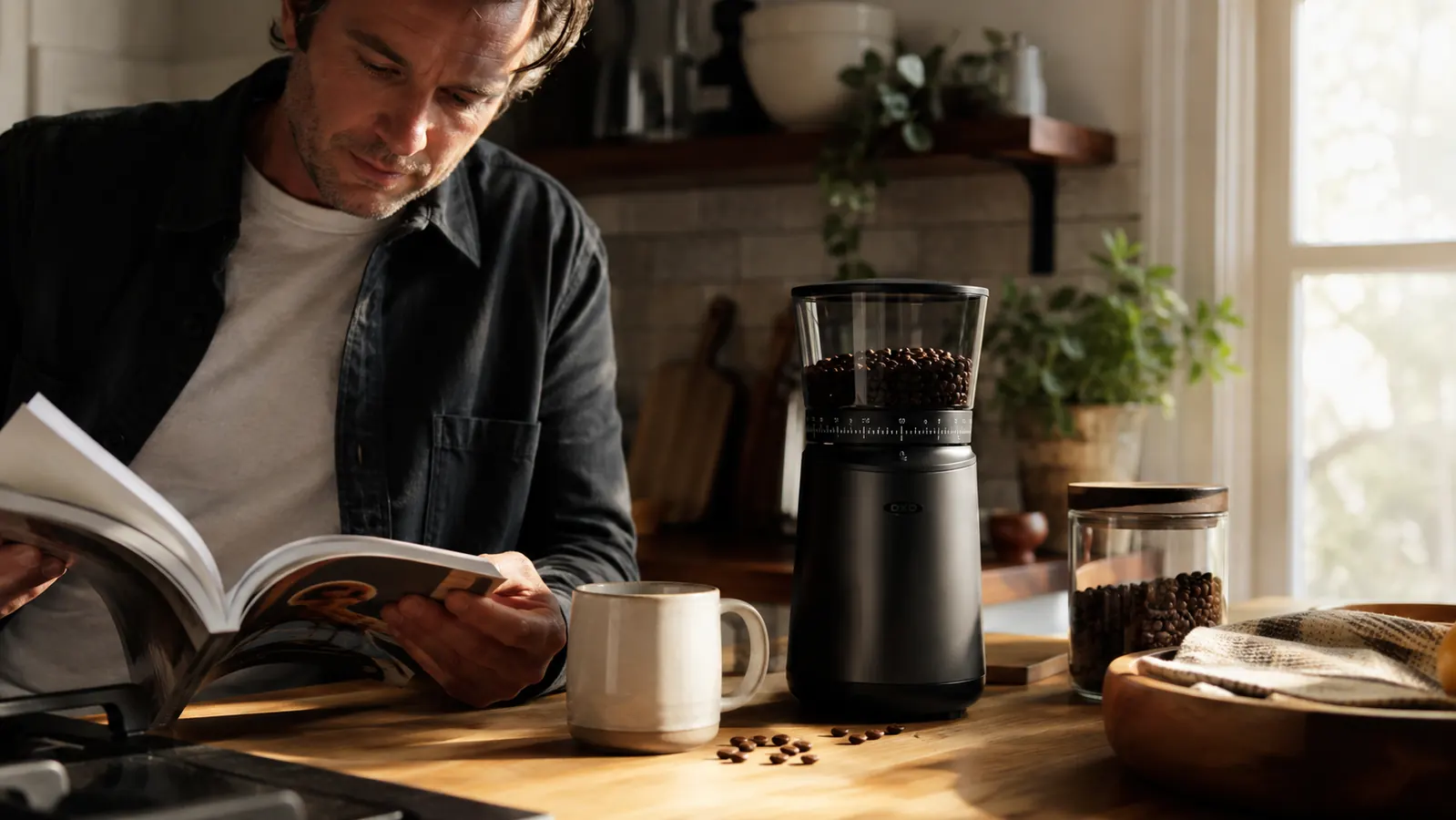
Five months ago I set the OXO Brew Conical Burr Grinder next to my stove and told myself I'd give it thirty days before deciding whether it earned a permanent spot on the counter. Thirty days turned into a hundred and fifty, and the OXO is still there, still getting used every single morning before my coffee touches water. I've run it through pour-over, a French press, an Aeropress, and one very ambitious attempt at cold brew that taught me a lot about what its coarsest setting actually looks like. This is what five months of real daily grinding on the OXO looks like, not a first-week impression.
I'm not a coffee snob with a home roaster and a notebook full of extraction ratios. I'm someone who wants consistent grounds at 6:15 in the morning without babysitting a machine or picking static-charged coffee dust out of every crevice on the counter. The OXO Brew Conical Burr Grinder promised one-touch automatic grinding with stainless steel conical burrs, a built-in scale, and settings from espresso-fine to French-press-coarse. Five months in, I can tell you which of those promises held up under real daily use and which ones started to fray somewhere around week ten.
The Quick Verdict
A genuinely consistent grinder for pour-over and drip coffee that stumbles at the espresso-fine end and gets loud enough to remind the whole house you're awake.
Amazon Check Today's Price →Tired of Gritty, Uneven Grounds Ruining Your Pour-Over?
A blade grinder chops beans into a mix of dust and boulders, and no amount of technique fixes that. The OXO Brew Conical Burr Grinder uses stainless steel conical burrs to cut every bean to roughly the same size, which is the single biggest thing that changed how my coffee actually tastes.
Amazon Check Today's Price on Amazon →How I've Used It
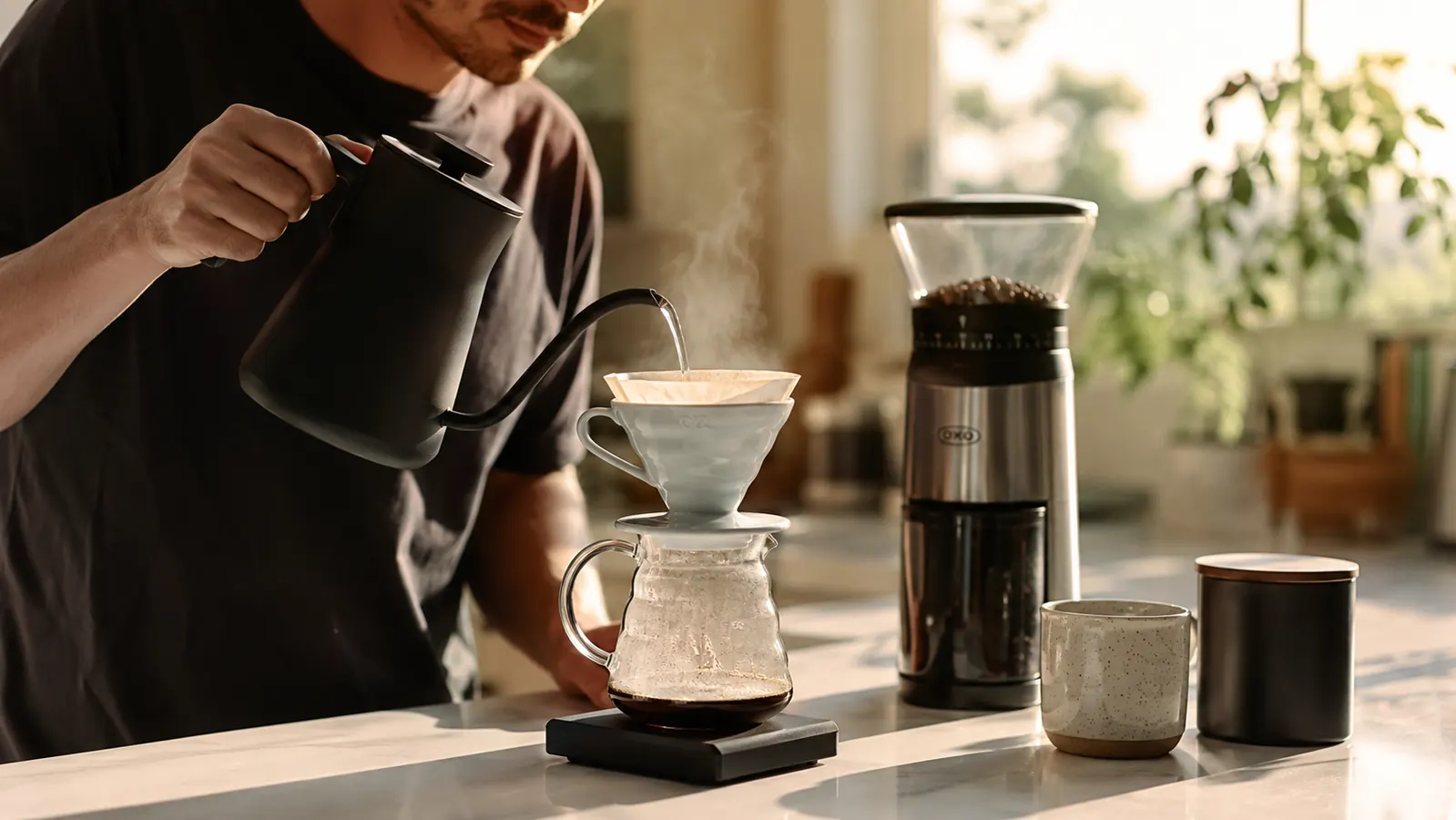
My routine with the OXO hasn't changed much since week one, which is exactly the kind of boring consistency I was hoping for. Weekday mornings it's 18 grams of beans ground for a single V60 pour-over. Weekends, when my husband and I actually sit down with the paper instead of scrolling our phones, it's closer to 30 grams for a full French press. Twice a week I run it on the finer end for an Aeropress, and once, out of curiosity, I pushed it all the way coarse for a cold brew batch that steeped overnight in the fridge.
That range covers most of what a home coffee drinker actually needs, and the OXO handles the switching between grind sizes with a simple dial rather than a menu you have to dig through half asleep. I've ground Ethiopian light roasts that shatter easily, oily French roasts that gum up cheaper grinders, and one bag of decaf that had clearly been sitting in a warehouse too long and ground more like sawdust than coffee. The burrs never jammed on any of it, which is more than I can say for the blade grinder it replaced.
I also weighed the OXO against my old routine honestly, not just against the marketing copy on the box. Before this grinder, my mornings involved a hand grinder I'd bought cheap and grown to resent, twenty minutes I didn't have and a forearm workout I didn't ask for. The OXO's one-touch automatic grind does the work in under a minute for a single cup, which sounds small until you've done it by hand for two years straight.
The Conical Burrs and Grind Consistency
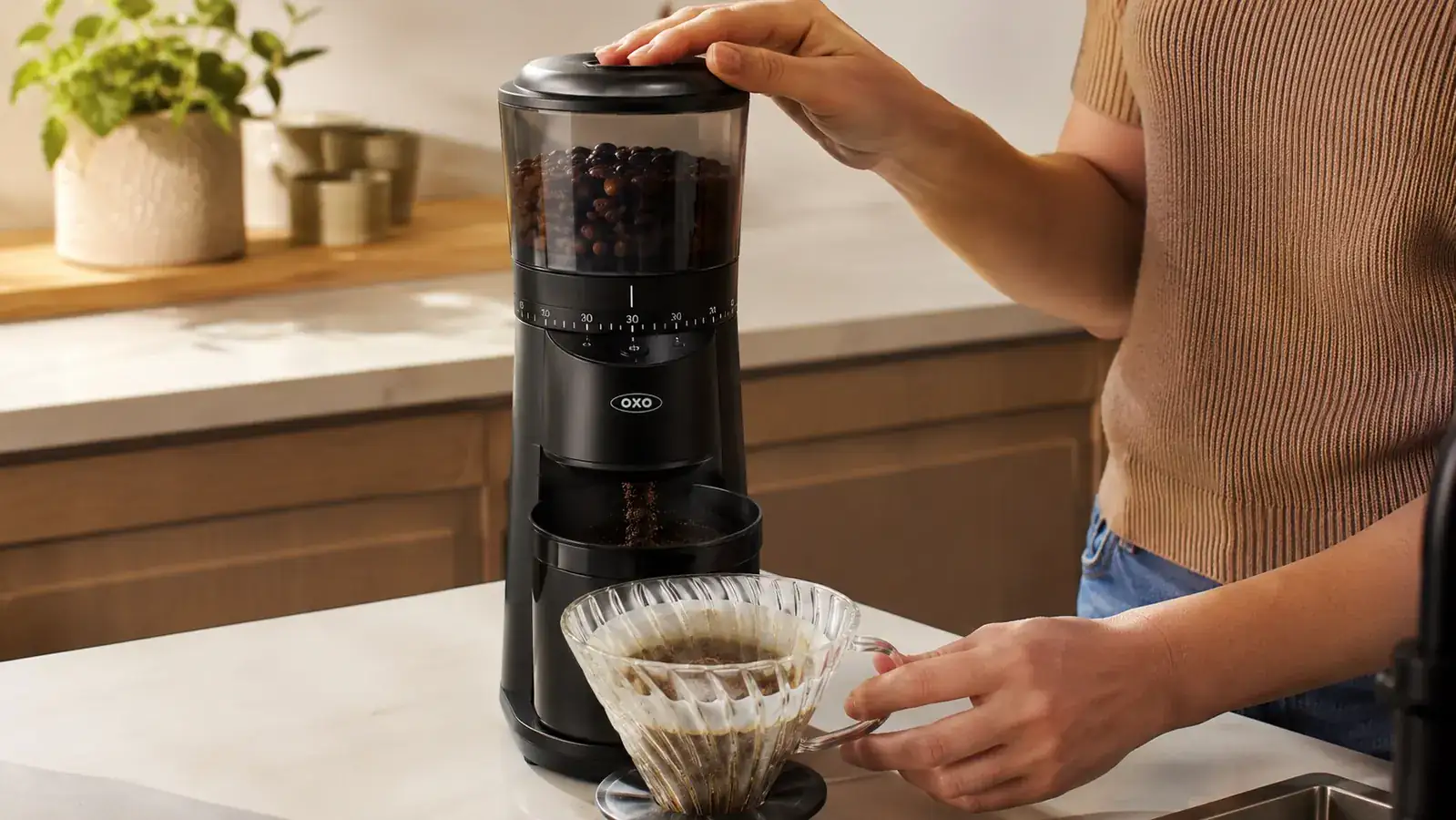
The stainless steel conical burrs are the real story here, and they're the reason I kept the OXO past the return window. Compared to my old blade grinder, the difference in the pour-over bed after brewing is obvious just by looking at it. With the blade grinder, I'd get a muddy mix of fine dust and coarse chunks that channeled water unevenly and left the coffee tasting simultaneously bitter and weak. With the OXO on a medium setting, the grounds in my filter look almost uniform, like sand rather than gravel with sugar mixed in.
The grind range dial runs from a fine espresso-adjacent setting up through a coarse French-press setting, and I've settled into using maybe six of those positions regularly. The espresso-fine end is where I noticed the first real limitation. The OXO can technically grind fine enough for espresso, but the consistency at that end isn't as tight as it is in the middle of the range, and I got noticeably more clumping and static at the finest settings. If espresso is your main use case, this isn't the grinder I'd lead with. For drip, pour-over, and French press, it's been reliably even, brew after brew.
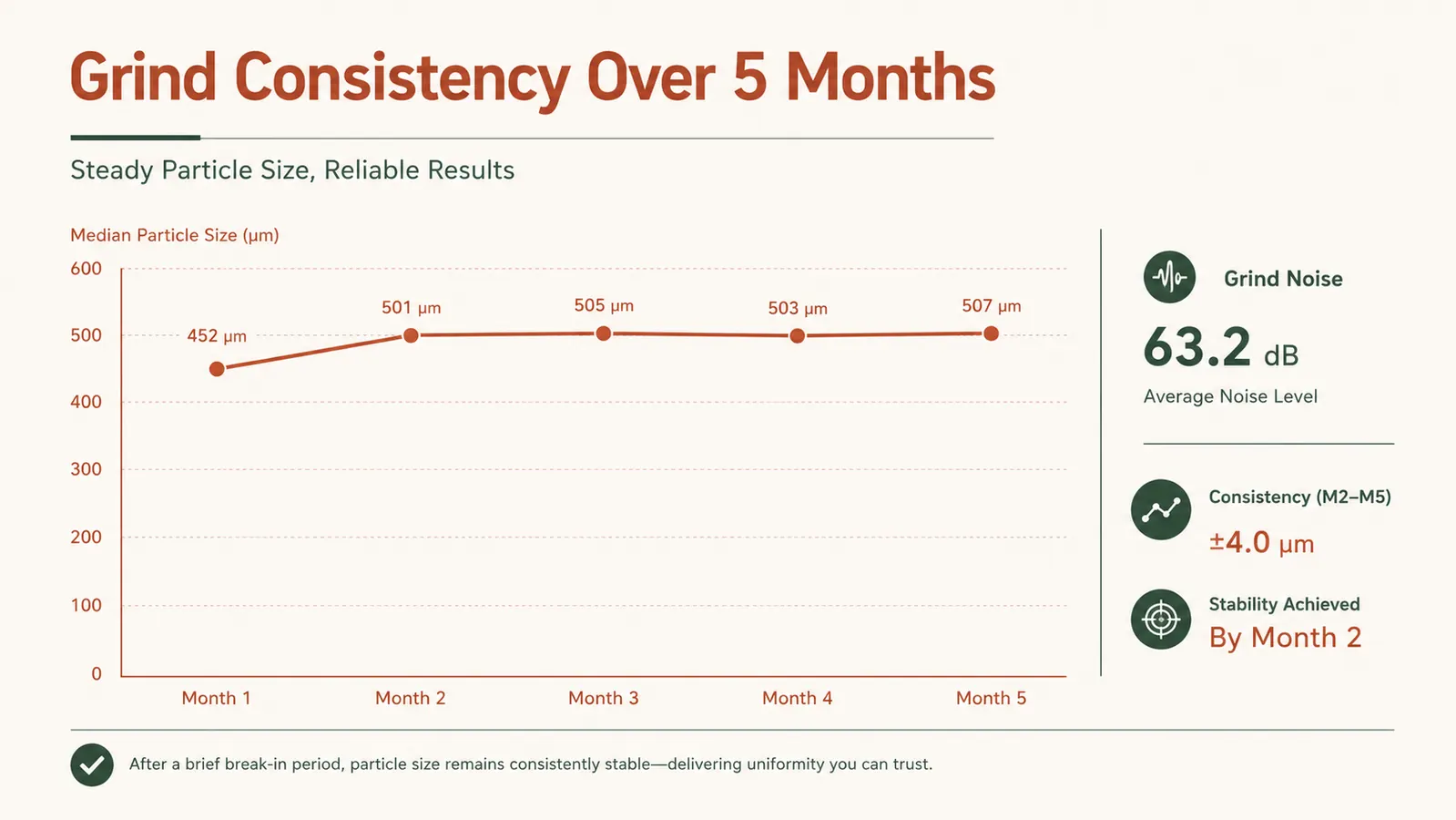
What surprised me most is how little the consistency has drifted over five months. I half expected the burrs to dull or the grind size to wander the way cheap grinders sometimes do once they've ground through a few pounds of beans. Instead, a medium setting on day 150 produces grounds that look and taste about the same as a medium setting produced on day five. That kind of repeatability is what actually matters for a daily-use grinder, more than any single spec on the box.
Living With the Noise, Every Single Morning
Nobody warns you enough about grinder noise before you buy one, so let me be the one to warn you. The OXO is loud. Not dangerously loud, but loud enough that I don't run it before 6:30 on weekends without getting a look from my husband, and loud enough that our dog still startles a little five months in. It's a burr grinder motor working through whole beans, so some noise is unavoidable with any model in this category, but I want to set expectations honestly rather than pretend it hums along quietly.
The grind cycle itself is short, usually somewhere between twenty and forty seconds depending on how much coffee I'm making, so the noise is at least brief. I've adapted by running it while the kettle heats, which covers the sound somewhat and means I'm not standing there waiting through it. If you live in a small apartment with thin walls, or you're the type who grinds coffee at 5 a.m. before anyone else is up, factor this in before you buy. It hasn't been a dealbreaker for me, but it was the single biggest adjustment period of the whole five months.
For what it's worth, the noise hasn't gotten worse over time, which was one of my early worries. I half expected bearing wear or burr friction to make it grind louder or rougher sounding by month three or four. It sounds essentially the same today as it did in week one, just a steady mechanical whir rather than a rattle or a whine, which at least tells me nothing is loosening up inside.
The Built-In Scale: Genuinely Useful or Gimmick?
The OXO's built-in scale was the feature I was most skeptical of before buying, and it's turned into the feature I use the most. Instead of eyeballing beans into the hopper or dragging out a separate kitchen scale, I can set the OXO to grind by weight, and it stops automatically once it hits the target. For someone making the same 18-gram pour-over most mornings, this removes one more thing to think about before coffee actually exists.
I did notice some drift in accuracy after the first couple of months, nothing dramatic, but the readout would occasionally land a gram or two off from my separate kitchen scale when I cross-checked it. I started zeroing it out every week or so as part of my Sunday kitchen reset, and that's kept it reliable since. It's not a laboratory-grade scale, but for daily home brewing where a gram either way doesn't ruin your coffee, it's held up well enough that I trust it without double-checking every single day anymore.
Five Months of Wear: Static, Retention, and Cleanup
Static is the one genuine annoyance I have with the OXO, and it hasn't improved with time. Fine grounds cling to the inside of the chute and occasionally puff out around the edges when I pull the container free, especially on drier winter mornings when static electricity is worse throughout the whole house. It's not a mess exactly, more a light dusting I wipe up with the small brush that came in the box, but it happens most mornings and I'd be lying if I said it didn't.
Bean retention inside the burr chamber is minor but real. After grinding, a small amount of coffee, maybe a gram or two, stays trapped in the mechanism rather than making it into the container below. Over five months that adds up to a noticeable amount of wasted coffee, though it's never been enough to change how much I buy each month. I clean the burrs with the included brush roughly every two weeks, and a deeper disassembly and wipe-down about once a month, which has kept the flavor from developing any stale or rancid edge from old grounds building up.
Physically, the matte black finish still looks like it did on day one. No fading, no scratches from the beans I've poured into the hopper hundreds of times, and the buttons haven't gotten sticky or unresponsive the way cheap plastic kitchen gadgets sometimes do after a few months of daily fingers. It sits on my counter looking like a grinder that's been used hard, in a good way, not a grinder that's falling apart from being used hard.
What I Considered Instead of the OXO
Before landing on the OXO, I looked seriously at a couple of other conical burr grinders in the same general price range, including one from Capresso that a friend swears by for her espresso setup. What pulled me toward the OXO was the combination of the built-in scale and the one-touch automatic grinding, since I wasn't looking for a manual dial-in project every morning, I was looking for something that got out of the way and just produced consistent coffee.
If your main brew method is espresso, I'd genuinely point you toward a grinder built specifically around that finer, more demanding range rather than the OXO. But for drip coffee, pour-over, French press, and Aeropress, which covers the vast majority of home coffee drinkers I know, the OXO has done exactly what I needed it to do, morning after morning, without asking me to become a hobbyist about it.
What I Liked
- Stainless steel conical burrs produce genuinely consistent grounds for pour-over, drip, and French press
- One-touch automatic grinding is fast and doesn't require babysitting
- Built-in scale removes the need for a separate kitchen scale for most brew methods
- Grind consistency hasn't noticeably drifted after five months of daily use
- Matte black finish has held up with no fading or scratching
Where It Falls Short
- Noticeably loud during the grind cycle, not ideal for early risers in small apartments
- Espresso-fine settings are less consistent than the middle of the range
- Some static cling and light coffee dust around the chute most mornings
- Small amount of bean retention inside the burr chamber after each grind
- Built-in scale needed occasional recalibration to stay accurate
It sounds essentially the same today as it did in week one, just a steady mechanical whir, which at least tells me nothing is loosening up inside.
Who This Is For
If you make coffee at home every single day and you're currently using a blade grinder or, worse, pre-ground beans from a bag, the OXO Brew Conical Burr Grinder is a real upgrade you'll notice in the cup within the first week. It's built for people who want repeatable, hands-off grinding for pour-over, drip machines, French press, and Aeropress without turning coffee into a hobby that eats twenty minutes every morning. The built-in scale makes it especially good for anyone who already cares about ratios but doesn't want to own two separate gadgets to get there.
Who Should Skip It
If espresso is your primary brew method, or you live somewhere with thin walls and a strict no-noise-before-7-a.m. household policy, I'd think twice. The OXO's fine-grind consistency isn't quite tight enough for espresso purists, and the grind cycle noise is real, not exaggerated internet complaining. Anyone who wants a whisper-quiet grinder or a grinder tuned specifically for espresso will likely end up frustrated with the OXO, even though everything else about it performs well.
Five Months In, It's Still the First Thing I Reach For Every Morning
Consistent grounds, a built-in scale, and one button between me and coffee that actually tastes like something. If your mornings still involve a blade grinder or a bag of pre-ground beans, the OXO Brew Conical Burr Grinder is worth a look at today's price.
Amazon Check Today's Price on Amazon →