
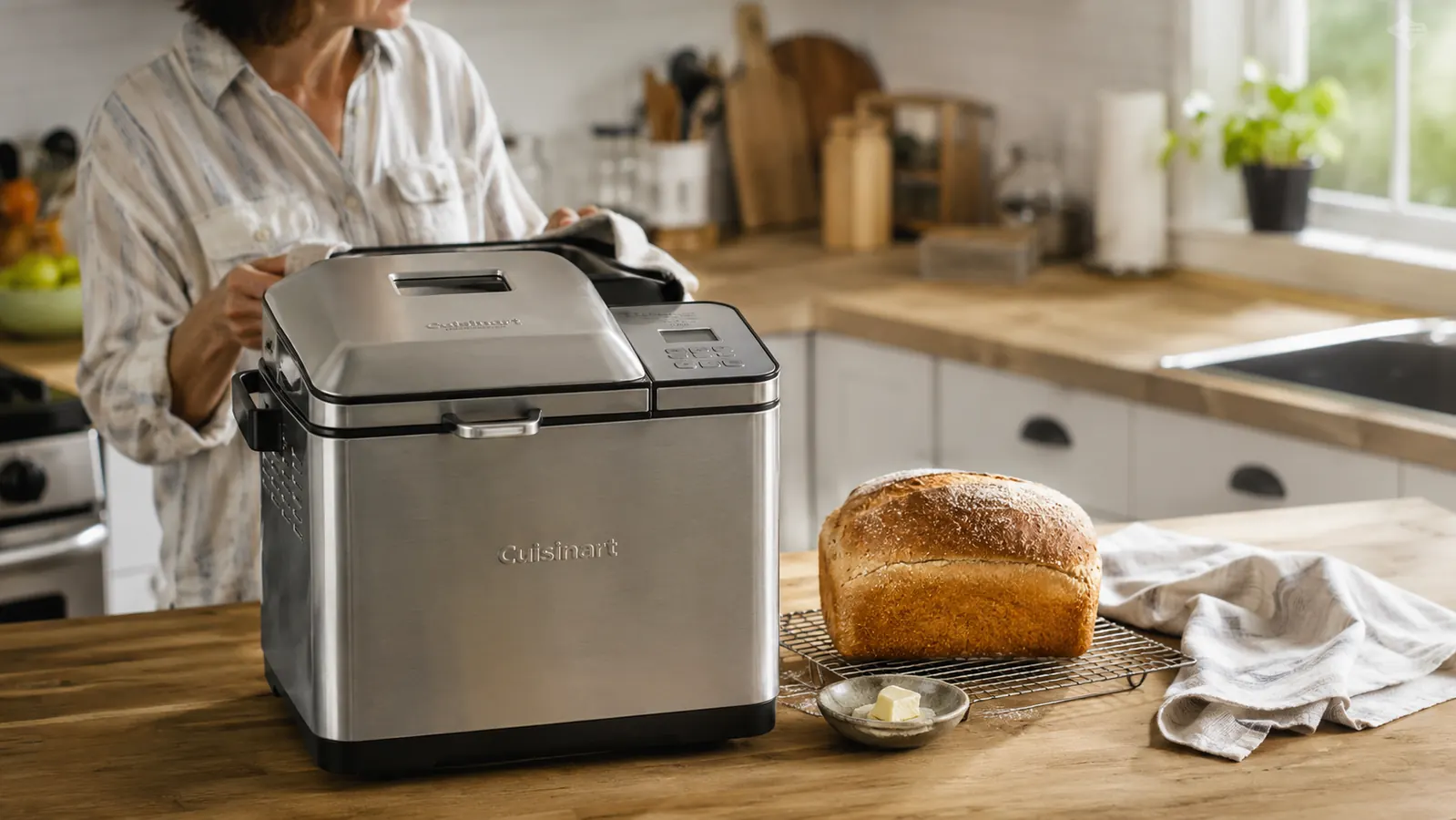
My Cuisinart bread maker has been on my counter for going on eight months now, and before it earned that spot, it had to beat out a machine that a lot of serious home bakers swear by: the Zojirushi Virtuoso Plus. I borrowed my sister's Zojirushi for three weeks, ran the exact same recipes through both machines on the same weekend, and paid attention to the stuff that matters after the novelty wears off, not just the first loaf out of the box.
If you want the short answer before the details: the Cuisinart CBK-110 is the one I kept, and it's the one I'd point most people toward first. It costs meaningfully less, it takes up less counter, and it makes a loaf that my family genuinely prefers for everyday sandwich bread. The Zojirushi is not a worse machine. It's a different machine built for a different kind of baker, and I'll walk through exactly where it pulls ahead so you're not guessing.
| Cuisinart Bread Maker | Zojirushi | |
|---|---|---|
| Price Range (typical) | $110 to $140 | $300 to $350 |
| Loaf Sizes | 1, 1.5, and 2 lb | 1, 1.5, and 2 lb |
| Menu Programs | 12 preset menus | 10 preset menus, includes dedicated gluten-free cycle |
| Kneading Paddle Style | Single vertical paddle | Dual horizontal paddles |
| Footprint | Compact, roughly 13.5 in wide | Wider and taller, roughly 16.5 in wide |
| Viewing Window | Yes, top window | Yes, larger top window |
| Nonstick Pan Warranty | 3-year limited warranty | 1-year limited warranty |
| Delay Timer | Up to 13 hours | Up to 13 hours |
| Best For | Everyday sandwich loaves, budget-conscious buyers | Artisan-style loaves, bakers who want maximum crust customization |
Where the Cuisinart Wins
Price is the obvious one, and I'm not going to pretend it isn't a big deal. The Cuisinart runs a fraction of what you'll pay for the Zojirushi, and for a machine that's going to live on a counter making toast bread and dinner rolls, that price gap is hard to argue with. I've talked to enough people who bought the pricier machine, used it four times, and then let it collect flour dust in a cabinet to know that the cheaper option that actually gets used every week wins in the long run.
The Cuisinart also just fits better in a normal kitchen. My counter isn't huge, and the CBK-110's footprint is noticeably smaller than the Zojirushi's. It slides in next to my coffee maker without eating the whole corner. And the single vertical kneading paddle, while it sounds less advanced than Zojirushi's dual-paddle setup, actually leaves a smaller hole in the bottom of the loaf when you pull the paddle out, which matters if you care about clean slices for sandwiches. The 3-year pan warranty versus Zojirushi's 1-year is also worth noting since the nonstick coating is the part that eventually wears out on any bread machine.
Where the Zojirushi Wins
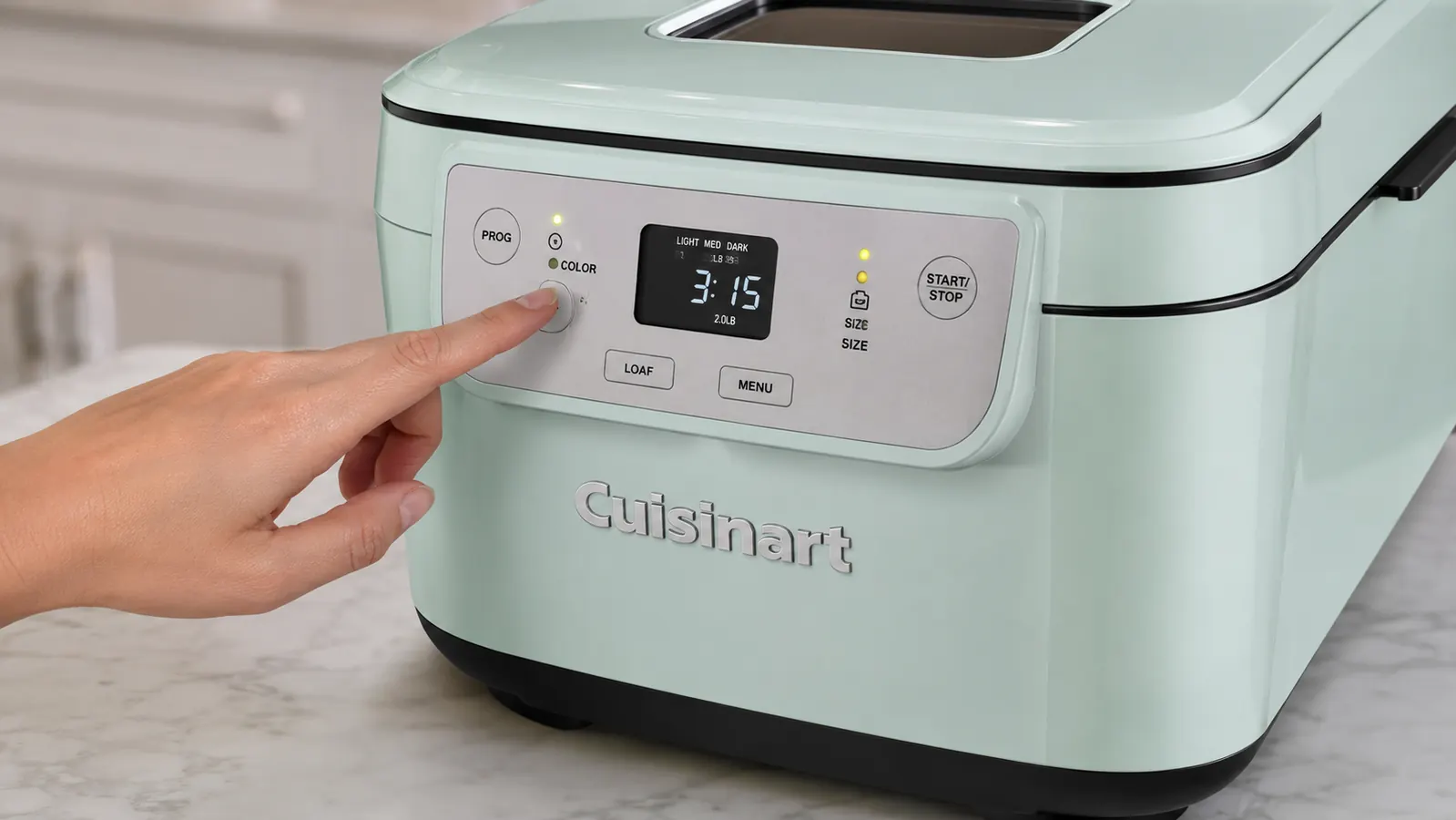
I'll give the Zojirushi its due. The dual horizontal paddles knead more thoroughly, and on higher-hydration doughs, like a wetter artisan loaf or a rich brioche, I noticed a more even crumb than what the Cuisinart produced. If you're the kind of baker who wants to experiment with sourdough starters, rye blends, or European-style loaves, the extra kneading power and the dedicated gluten-free cycle genuinely make a difference in the finished texture.
The larger viewing window is a small thing that adds up over time too. When you're troubleshooting a dough that looks too dry or too wet mid-cycle, being able to actually see what's happening without lifting the lid and losing heat is a real convenience. And the Zojirushi's build quality feels a notch above, which makes sense given the price. If bread machine baking is closer to a hobby than a Tuesday-night chore for you, that quality difference is part of what you're paying for.
The Zojirushi bakes a slightly better artisan loaf. The Cuisinart bakes the loaf my kids will actually eat, and it does it for less than half the price.
Skip the guesswork and see today's price on the machine I actually kept
The Cuisinart CBK-110 is the one that earned a permanent spot on my counter. Check current availability and today's price before it changes.
Amazon Check Today's Price on Amazon →How I Tested Both Machines
I didn't just run one loaf through each and call it a comparison. Over three weeks I made the same basic white sandwich loaf, a whole wheat loaf, and a batch of pizza dough in both machines, using the same brand of flour and the same water temperature each time. I timed the cycles, weighed the finished loaves, and cut them the same way to compare crumb structure side by side on my kitchen table.
I also paid attention to the boring stuff that reviews often skip: how loud each machine got during the kneading cycle, how easy the pan was to pull out and wash, and whether the crust color settings actually produced a noticeable difference. The Cuisinart's kneading cycle was audibly quieter, which mattered more than I expected once I was running loaves overnight using the delay timer.
Price Difference: What You're Actually Paying For
A gap of roughly two hundred dollars between these two machines isn't nothing, and it's worth being honest about what that money buys. You're paying for a stronger, dual-paddle motor, a slightly larger capacity feel, tighter temperature control on specialty cycles like gluten-free, and a brand reputation Zojirushi has earned over decades of making rice cookers and bread machines that last.
What you're not necessarily paying for is a dramatically better everyday sandwich loaf. For basic white, wheat, and even a solid cinnamon raisin loaf, I couldn't tell much difference in taste between the two machines in a blind taste test with my husband. He picked the Cuisinart loaf as his favorite twice out of three tries, honestly, which surprised me.
Loaf Quality and Crust, Side by Side
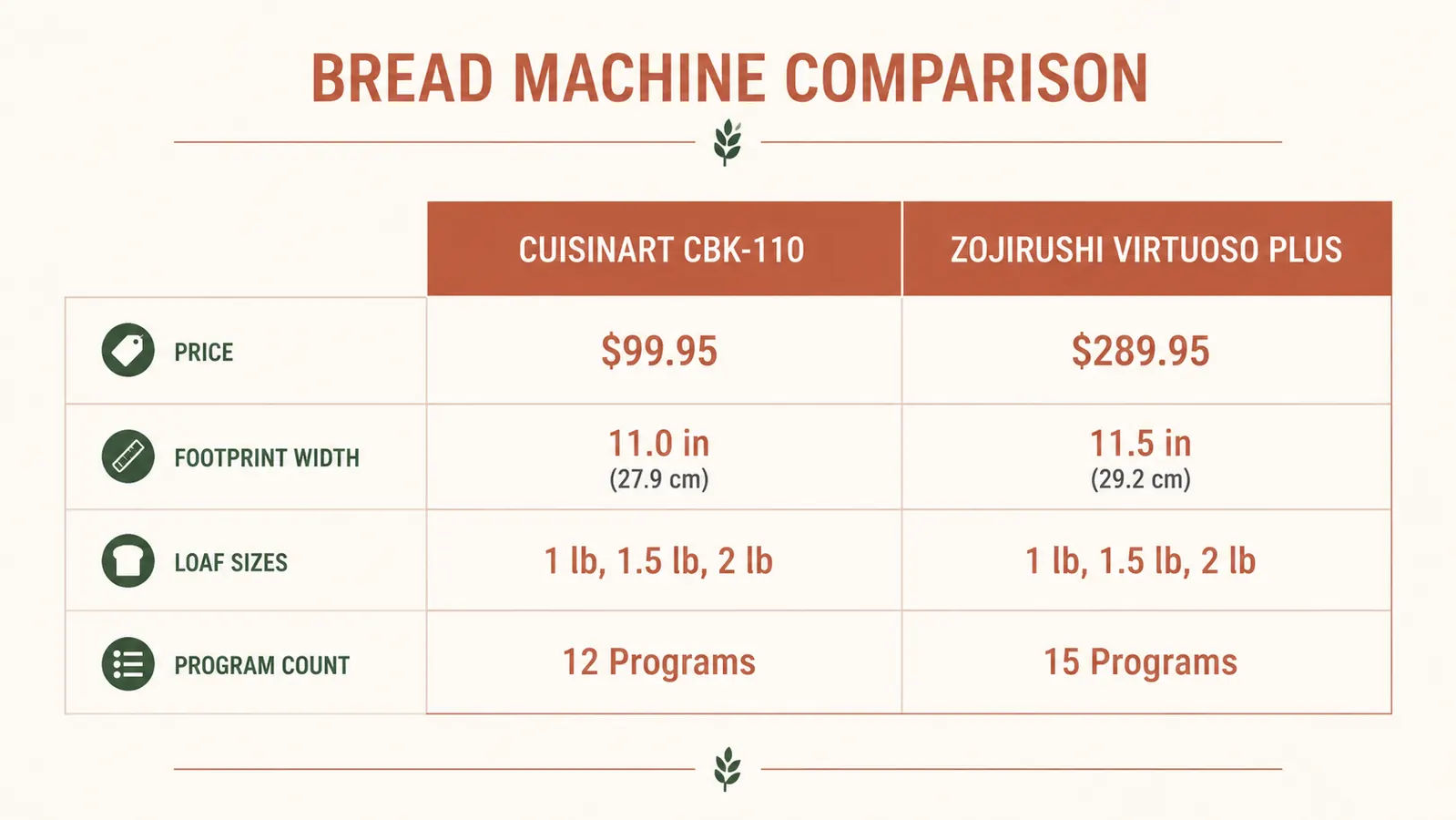
On basic loaves, both machines produced a good rise and an even, golden crust on the medium setting. The Cuisinart's crust ran slightly thicker and chewier, which my family actually prefers for sandwiches since it holds up better to mustard and mayo without going soggy. The Zojirushi's crust was thinner and a bit more delicate, closer to what you'd get from a bakery loaf.
Where the gap widened was on the whole wheat loaf. The Zojirushi's dual paddles worked the denser dough more thoroughly, and the resulting crumb was a touch more open and even. It wasn't a night-and-day difference, but if whole grain and specialty flours are most of what you bake, that's a legitimate point in Zojirushi's favor.
Cleanup and Long-Term Maintenance
Both machines use a removable nonstick pan and a kneading paddle that pops off the drive shaft, and neither one is dishwasher safe, so you're wiping them down by hand either way. The Cuisinart's pan is a little lighter and easier for me to maneuver one-handed while I'm rinsing it under the tap. The Zojirushi's pan is sturdier feeling but also heavier, and the dual paddle setup means two paddles to fish out of a warm loaf instead of one, which is a minor annoyance but a real one at nine at night.
Over eight months, my Cuisinart pan still releases loaves cleanly with just a light spray of oil before each bake. My sister's Zojirushi, which is a couple years older, has started sticking slightly on the corners, though that's more a function of age than brand. This is exactly why the warranty gap matters. A 3-year pan warranty on the Cuisinart versus a 1-year warranty on the Zojirushi means if the coating does wear out early, you're covered a lot longer on the machine that already costs less to replace.
Add-Ins, Custom Cycles, and Everyday Flexibility
Both machines have an add-in beeper that tells you when to drop in raisins, nuts, or chopped herbs without over-mixing them into mush, and both handled that step reliably in my testing. Where they differ is in the extras. The Cuisinart's 12 menu options cover the basics well, including a dedicated jam cycle and a dough-only setting I use constantly for pizza night and dinner rolls that finish baking in the oven.
The Zojirushi's 10 programs are fewer on paper but lean into precision, especially the dedicated gluten-free cycle, which uses a different kneading rhythm suited to gluten-free flour blends that don't behave like regular wheat dough. If gluten-free baking is a real need in your house and not an occasional experiment, that one program alone might be worth the price gap. For everything else, from basic loaves to pizza dough to jam, I honestly didn't miss anything on the Cuisinart.
Setup and the Learning Curve
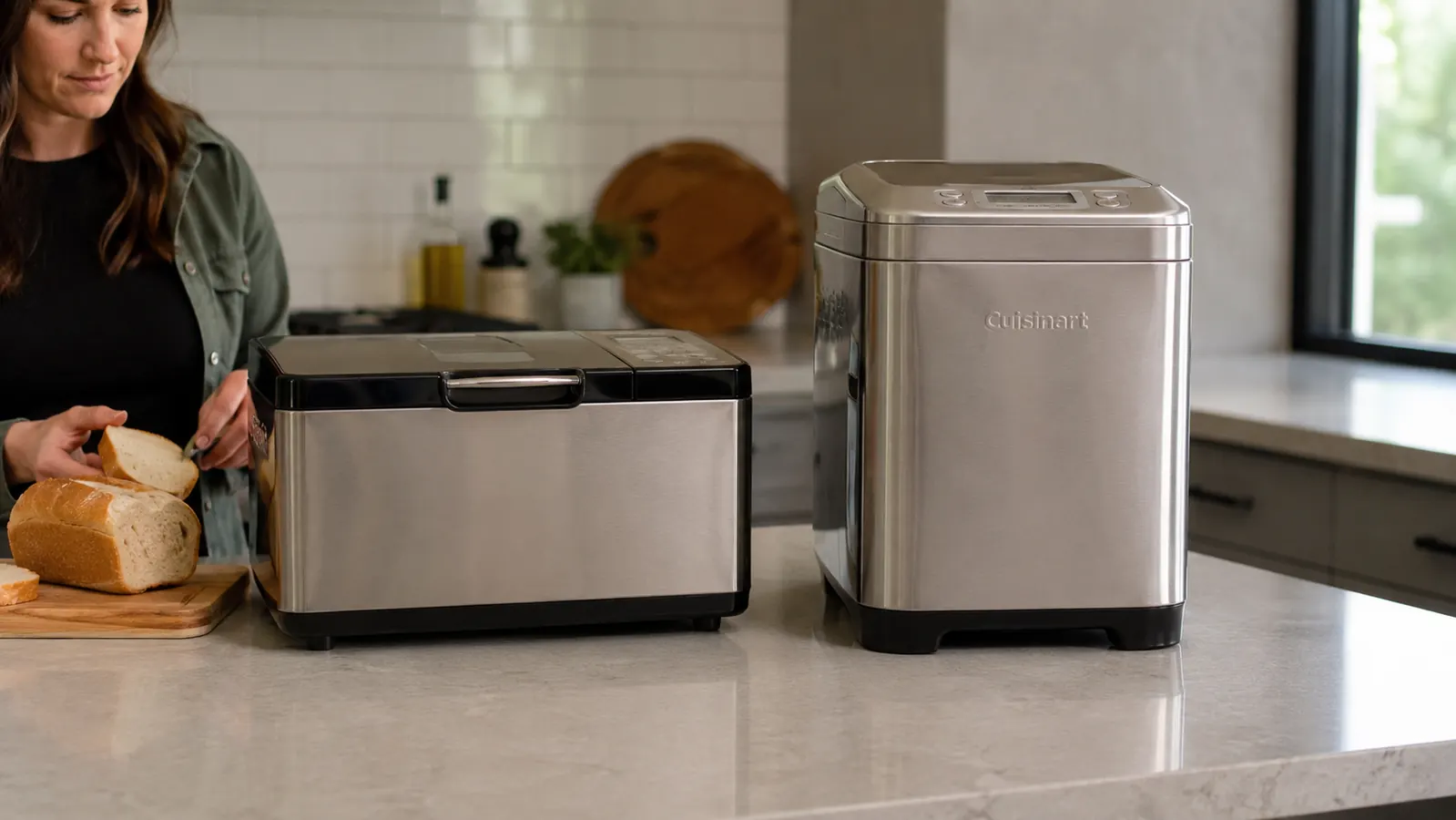
Both machines were straightforward to set up out of the box, but the Cuisinart's manual and menu layout felt a little more intuitive to me on day one. The LCD screen clearly labels which cycle, loaf size, and crust color you've selected before you hit start, so there's less second-guessing whether you actually picked whole wheat instead of the basic cycle. The Zojirushi's manual leans more technical, which makes sense given how many settings it's trying to explain, but it took me an extra loaf or two of trial and error before I felt confident using the custom cycle.
Neither machine requires any special skill to get a decent first loaf. You're dumping measured ingredients into a pan, selecting a cycle, and walking away for a few hours. But if you're buying a bread machine specifically because you don't want a steep learning curve, the Cuisinart gets you to a reliable, repeatable loaf faster. The Zojirushi rewards patience and experimentation more than it rewards someone who just wants toast bread on a Tuesday.
Footprint, Noise, and Everyday Use
This is the category that ends up mattering most six months in, once the excitement of a new appliance has worn off. The Cuisinart's smaller footprint means it's realistic to leave it out permanently on a normal-sized counter, which is exactly why mine gets used two to three times a week instead of getting shoved in a cabinet after the first month.
The Zojirushi is taller and wider, and while it's not unreasonably huge, it does eat more real estate, and it's a heavier machine to move if you don't have room to leave it out. If your counter space is tight, that alone might settle the decision before you even get to loaf quality.
Ready to see it in your own kitchen?
Check today's price on the Cuisinart CBK-110 and see why it's the one that stayed on my counter after the Zojirushi went back to my sister.
Amazon Check Today's Price on Amazon →Who Should Buy Which
If you want a bread machine that makes good, consistent sandwich bread without a big upfront cost, and you don't have a ton of extra counter space to spare, the Cuisinart is the easy pick. It's the machine I recommend to most people who ask me this question, because most people baking bread at home are making sandwich loaves and pizza dough, not chasing bakery-level artisan crumb every week.
If you're already a serious home baker, you bake specialty loaves like rye or sourdough regularly, gluten-free is a household requirement, and the price difference genuinely doesn't matter to your budget, the Zojirushi earns its higher price tag. It's a better tool for that specific job. For everyone else, including me, the Cuisinart does ninety percent of what the Zojirushi does at less than half the cost, and it's the one I still reach for every week.
See the Cuisinart's current price and availability
Prices on bread machines move around more than you'd think. Check today's price on the Cuisinart CBK-110 before you decide.
Amazon Check Today's Price on Amazon →