
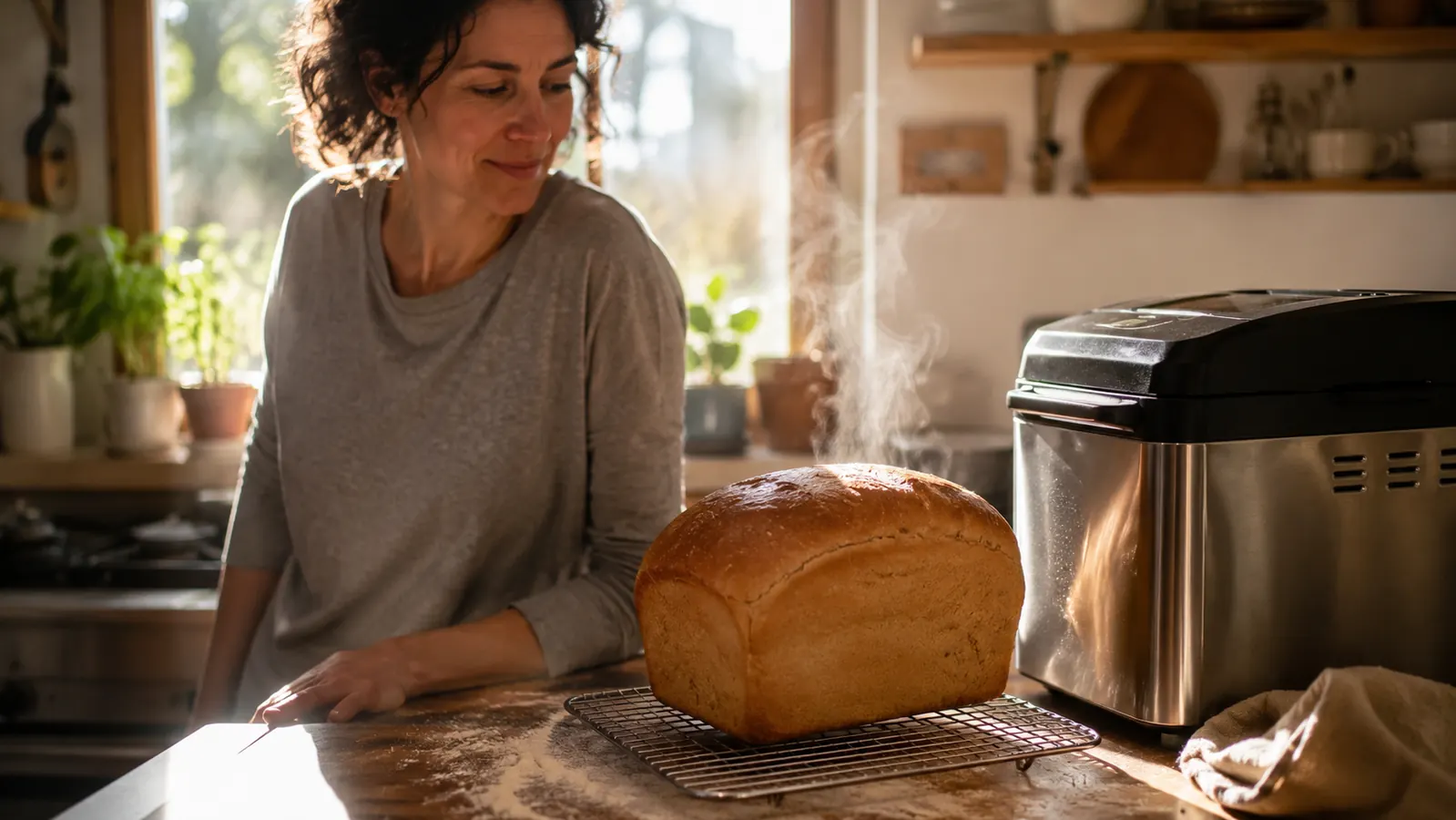
For almost three years, my Saturday morning had a fixed stop on it. Ferris Street Bakery, seven minutes from my house, for a six-dollar loaf of their sourdough. I told myself it was a small treat, the kind of thing you do not bother calculating because it feels harmless. Then one January morning my husband Miguel added it up out loud while we sat in the drive-through line for coffee. Fifty-two Saturdays. Roughly three hundred dollars a year, just on bread, not counting the coffee. I did not argue with the math. I just felt a little foolish that I had never done it myself.
I am not a bread person by nature. I have tried the whole yeast-and-kneading routine twice and both times ended with a dense brick my kids politely declined to eat. So when I started looking at bread machines, I was not expecting to fall in love with one. I landed on the Cuisinart Bread Maker Machine mostly because it was stainless steel, which felt like it would survive daily use, and because it had twelve menu options and three loaf sizes, so I would not be stuck making one giant loaf every time whether we needed it or not.
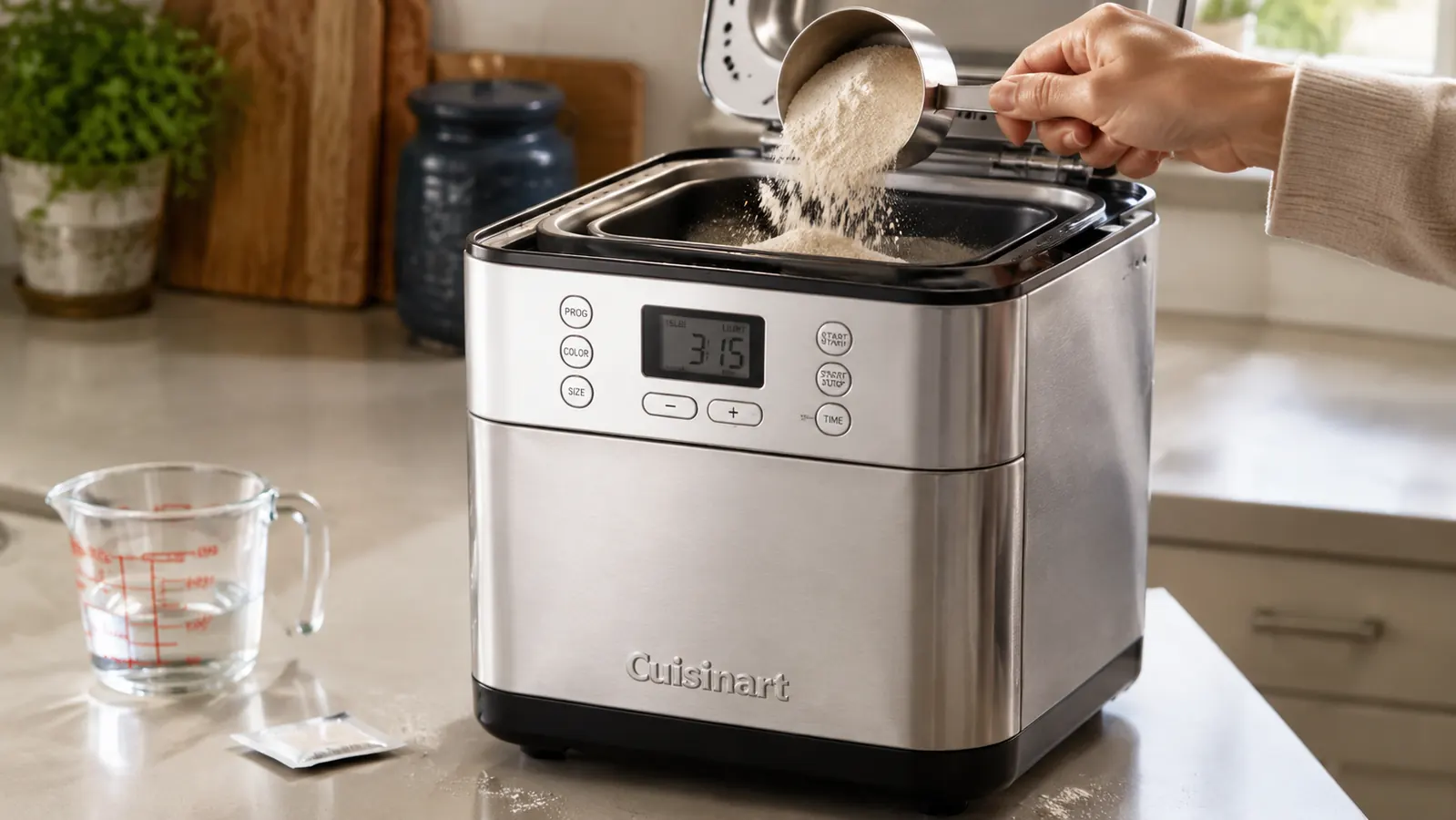
The first loaf I made was a plain white sandwich bread, the safest option on the dial. I dumped in flour, water, yeast, a little butter, set the machine, and went about my Saturday like normal. Three and a half hours later the whole downstairs smelled like a bakery, and I mean that literally. My youngest walked in from the backyard, stopped in the doorway, and asked if we had company over. That was the moment I realized this machine was not going to be a novelty gathering dust in the pantry.
It was not perfect out of the gate. My second loaf came out with a sunken top because I eyeballed the water instead of measuring it properly, and my third stuck to the pan because I forgot the little squeeze of oil the manual recommends. Neither of those were the Cuisinart's fault. They were mine, and they taught me the two things that actually matter here: measure your liquid the same way every time, and read the quick-start card taped inside the lid until you do not need it anymore. Once I got that rhythm down, the failures stopped.

What changed my Saturdays was not the first loaf. It was the fourth or fifth, when I started loading the pan Friday night and setting the delay timer so the bread finished right as everyone was waking up. There is something genuinely different about walking into a kitchen that already smells like warm bread instead of walking into a bakery line that smells like everyone else's warm bread. I did not expect that distinction to matter to me. It did.
I did not expect a stainless steel box on my counter to be the thing that finally got me out of the Saturday bakery line, but the smell hitting me before I was even fully awake did more of the convincing than any receipt ever could.
Ready to trade the bakery line for a kitchen that smells like one instead?
The Cuisinart Bread Maker Machine is the one I load up on Friday nights so Saturday starts with a warm loaf already waiting. Twelve menu options, three loaf sizes, and a stainless body that has held up to daily use in my house.
Amazon Check Today's Price on Amazon →Once the plain white loaf became routine, I started trying other menu settings. The whole wheat cycle became my everyday bread for the kids' lunches. The dough setting turned out to be the real sleeper feature, since the Cuisinart handles the mixing and first rise for pizza dough on Friday nights, then I just shape and bake it myself. I have not touched the jam or gluten-free settings much, but knowing they are there has made me more willing to try things I would have skipped with a machine that only did one job.
The savings turned out to be real, not just a number Miguel and I made up in a coffee line. Between flour, yeast, and the occasional splurge on better butter, a homemade loaf costs us around a dollar fifty. Compare that to six dollars at Ferris Street, and even counting the machine itself, we were ahead of the bakery habit within about two and a half months, mostly because we stopped making the bakery trip entirely instead of doing both.

I will not pretend it replaces an actual artisan loaf in every way. Ferris Street's crust has a shatter to it that comes from a professional oven, and my Cuisinart loaves have a softer, more sandwich-bread crust by comparison. If you are chasing that bakery-crust experience specifically, this machine will not fully deliver it, and I would rather say that up front than oversell it. What it delivers instead is a warm, reliably good loaf with almost no effort, on a schedule I control instead of one dictated by a bakery's hours.
My sister borrowed mine for a week when hers broke, and she texted me on day three asking where to buy her own. That means more to me than anything I could write here, because she saw the actual routine up close, delay timer and all, not just the finished loaf.
What I'd Tell You If We Were Sitting at My Kitchen Table
If you asked me over coffee whether you should get one of these, I would ask a couple of questions first. Do you actually eat bread often enough that a Saturday bakery habit adds up to real money over a year? If not, this will not change your life, and I would tell you to save the counter space. But if you are like I was, buying bread out of habit more than genuine craving, and you have room for one more stainless steel box, this is one of the few kitchen gadgets that earns its keep instead of just taking up space. It will not make you a baker overnight. It will make the Saturday routine easier, cheaper, and a little better smelling, and for me that has been enough.
The loaf that used to cost me a Saturday drive now starts before I'm even out of bed.
Load the Cuisinart Bread Maker Machine Friday night, set the delay timer, and wake up to a finished loaf. See today's price and current availability on Amazon.
Amazon Check Today's Price on Amazon →