
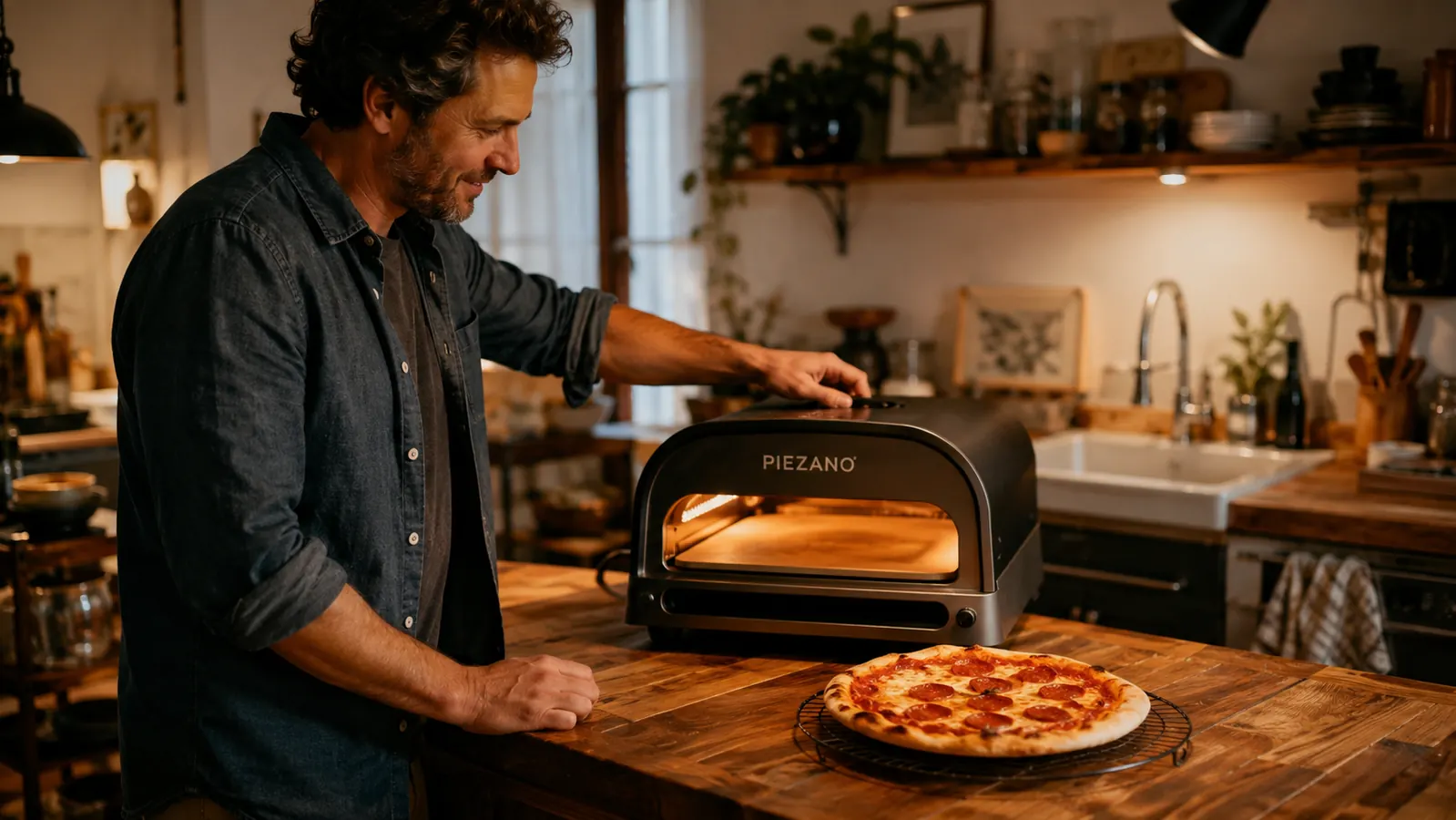
I bought the PIEZANO 12-inch electric pizza oven in early March because Friday nights at our house had turned into a $58 delivery habit, and my son Jack, who is nine and picky about almost everything except pepperoni, was the one who kept asking for it. Four months and somewhere around 60 pizzas later, the PIEZANO lives permanently on our kitchen counter next to the coffee grinder, and Friday delivery has dropped to maybe once a month, usually when I'm too tired to deal with dough.
This isn't a lab test. I don't have an infrared thermometer gun or a stopwatch app running every session. I'm a home cook who has made everything from frozen dough balls to homemade Neapolitan-style rounds on this thing almost every week since March, and this review comes from that lens, the same lens I wish someone had used before spending money on a countertop appliance I'd never touched or heard hum in person.
The Quick Verdict
A genuinely capable countertop pizza oven if you're willing to learn its quirks. The 800°F ceramic stone gets real char on the crust, though the small 12-inch cook chamber and uneven top-heat take some practice to work around.
Amazon Check Today's Price →Tired of $58 Friday Night Delivery for Soggy Crust?
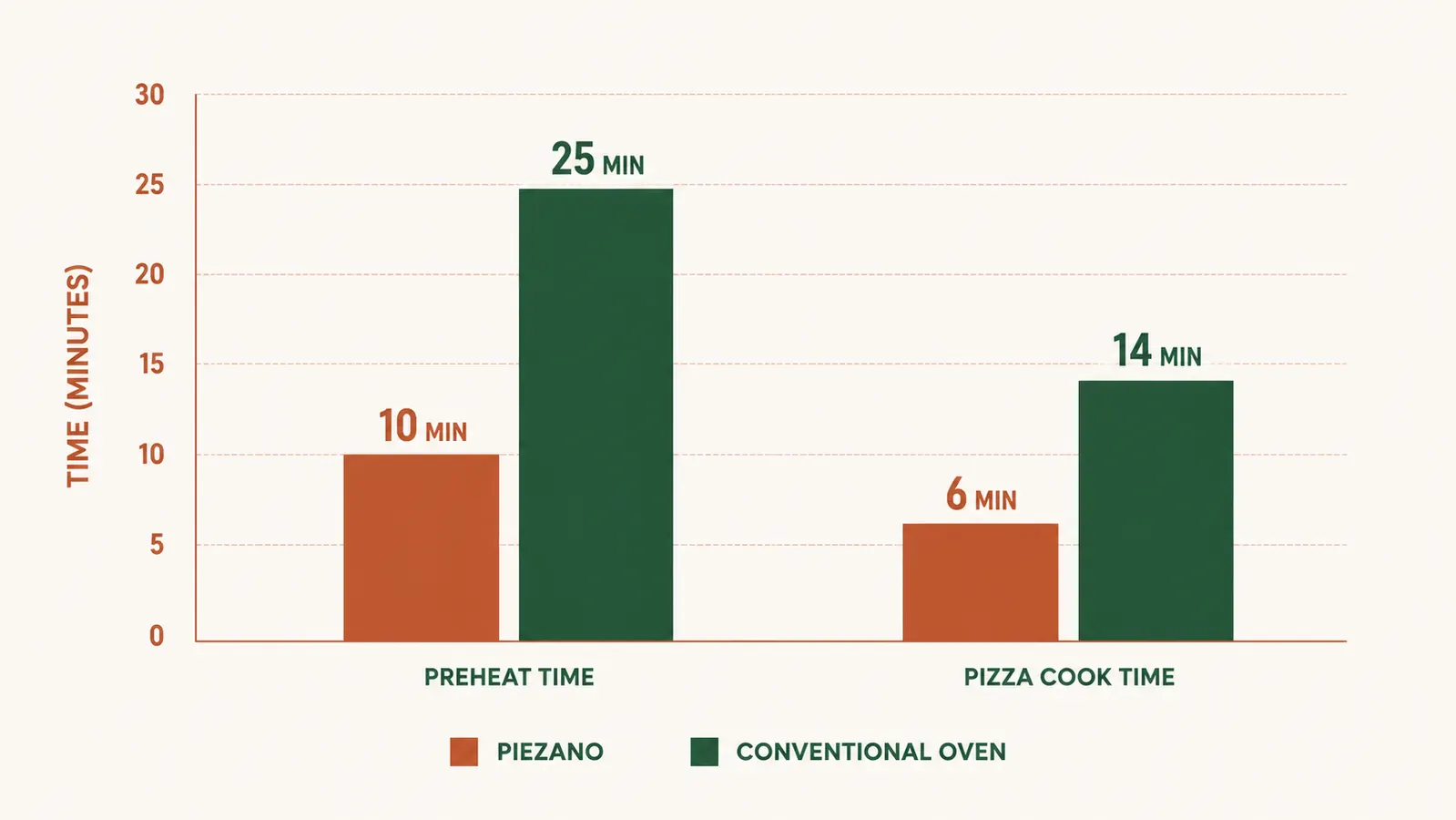
The PIEZANO heats a ceramic stone to 800°F in about 10 minutes, hot enough for real char and a crisp bottom that a home oven can't touch. Check today's price and see the current rating for yourself.
Amazon Check Today's Price on Amazon →How I've Used It
Our routine settled fast. Fridays after school, Jack and I mix a batch of dough around 4pm, three cups of flour, a packet of yeast, and enough olive oil to make it workable, and let it rise on top of the fridge where it's warm from the compressor. By 6:30, the PIEZANO has been preheating for about 15 minutes with the stone dial cranked all the way up, and we roll out two 10-inch rounds because that's about as large as fits comfortably without the edges brushing the heating coils above.
The first few weeks were rough, honestly. My first pizza came out with a scorched edge on one side and a slightly doughy center, because I didn't yet understand that the top heating element runs hotter than the stone below it, and a 10-inch pizza needs to be rotated at least once, sometimes twice, during its five to seven minute cook. Once I started turning the pizza a quarter turn every two minutes with the little wooden peel that came in the box, the results turned genuinely good, blistered crust, melted cheese with real color on it, not the flat pale bake you get from a home oven.
By month two we'd branched out past plain cheese and pepperoni. My daughter Ava, who's 13 and going through a phase where she wants everything with hot honey on it, does a soppressata and hot honey pie most weeks now, and it cooks in almost the same time as the kids' plain cheese pizza, which matters on a Friday when everyone wants their food at roughly the same moment instead of one at a time. We've also done a couple of dessert pizzas, Nutella and banana, which the PIEZANO handles fine since the short cook time doesn't scorch the toppings the way a longer bake would.
I started tracking what a Friday night actually costs us somewhere around month two, mostly because Ava asked me to for a school project on budgeting. A ball of dough, sauce, and toppings for two 10-inch pizzas runs us about $9, closer to $11 for the soppressata and hot honey version with pricier toppings. Compare that to the $58 we used to spend on two large delivery pizzas with tip, and the PIEZANO had paid for itself inside of two Fridays. That math is the real reason it's stuck around instead of getting shoved in a cabinet once the novelty wore off, which is exactly what happened to the last kitchen gadget I bought on impulse.
The Ceramic Stone and the 800°F Claim
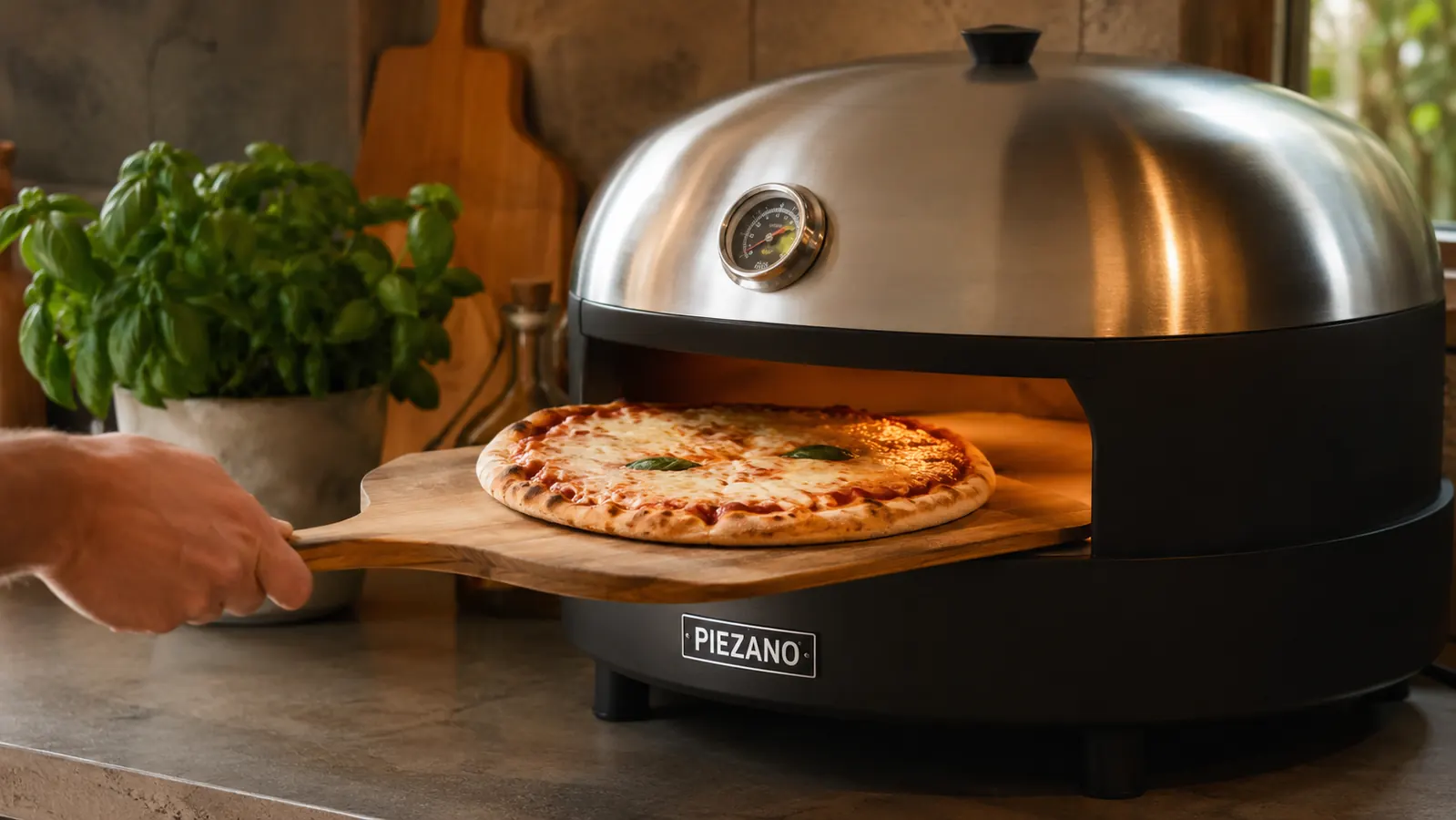
PIEZANO advertises 800°F, and I wanted to know if that number was real or marketing, so I bought a cheap $12 infrared thermometer off Amazon in April and started pointing it at the stone before I slide a pizza in. Most preheats, after a full 10 to 12 minutes on the highest setting, read somewhere between 740°F and 790°F at the center of the stone, and noticeably cooler near the edges, closer to 650°F. So it's not quite hitting the advertised number in my kitchen, but it's close enough, and it's still well past what any conventional home oven can do, since most top out around 550°F even on self-clean-adjacent settings.
The stone itself is the single biggest reason I've kept using this oven instead of going back to a sheet pan in the regular oven. It holds heat between pizzas, so the second and third pies of the night cook just as fast as the first, maybe even a touch faster since the whole unit has had more time to soak up heat. It does take a full 10 minutes minimum to get back up to temperature if you let it sit cold for more than a day, which I learned the hard way on a Tuesday when I tried to squeeze in a quick lunch pizza and ended up waiting almost as long as I would have for delivery.
One thing I didn't expect: the stone develops dark char rings after repeated use, which looks a little alarming the first time you see it but is completely normal, the same way a well-used cast iron pan darkens over time. It doesn't affect cook quality. What does matter is letting flour or cornmeal dust build up, since that stuff burns and smokes on a stone this hot, so I've learned to brush the stone out with a small stiff brush between pizzas, not after the whole session is done.
Four Months In: What's Held Up
The housing is stainless steel and still looks close to new, no discoloration or warping despite regular runs at maximum heat. The glass viewing window on the front has developed a permanent light haze from grease and smoke that a paper towel and a little vinegar mostly cuts through, though it never gets back to fully clear, more like the window on a well-used toaster oven than a brand new appliance. I check on the pizza by cracking the door slightly more than I'd like to now, since the haze makes it hard to judge doneness through glass alone.
The knobs for top and bottom heat have stayed responsive, no wobble or looseness after roughly 60 uses, and the power light and heating indicator both still work exactly as they did on day one. I did have one small scare in May when the unit didn't seem to be heating past 500°F one Friday, which turned out to be a buildup of burnt flour sitting between the heating coil and the stone from a particularly messy dough-stretching session the week before. A thorough brush-out fixed it completely, and it's run normally every session since.
Cleanup overall is manageable but not effortless. The stone itself should never be washed with soap, you just scrape and brush it, and any grease that drips onto the base tray underneath needs to be wiped while it's still slightly warm or it hardens into something closer to concrete. I keep a designated silicone-tipped scraper next to the oven now specifically for this, which has cut my post-pizza cleanup time down to about five minutes from closer to fifteen in the first month when I was doing it wrong.
The smoke detector incident deserves its own mention. Twice now, both times when I got greedy with toppings and let melted cheese drip onto the hot base tray, our kitchen smoke detector has gone off mid-cook. It's not really a flaw in the PIEZANO itself, any high-heat pizza oven will smoke if grease hits a surface pushing 700 degrees, but it's worth cracking a window or running the range hood fan the way you would for a hot cast iron sear, especially in a kitchen without great ventilation like ours.
Tradeoffs I Didn't Expect
The 12-inch cooking chamber is smaller than the marketing photos make it look. In practice, a fully stretched 12-inch dough round touches the walls on all sides, which means most of my pizzas actually end up closer to 10 or 10.5 inches so I have room to maneuver the peel without dragging cheese across the heating element. If you're regularly feeding more than four people, plan on cooking multiple smaller pizzas back to back rather than one large one, which is fine given the fast cook time but worth knowing before you buy.
The uneven top-versus-bottom heat that tripped me up early on never fully goes away, it just becomes something you manage. Thin, evenly stretched dough with a light hand on toppings cooks great. A thick-crust or deep-dish style pizza, which I tried exactly once in April, comes out with a nicely charred top and a center that's still a little gummy, because the top element does most of the work and the bottom stone alone isn't enough to finish a thick dough through. This oven wants thin and Neapolitan-adjacent styles, not Chicago deep dish.
The Ooni and Other Options I Looked At First
Before buying the PIEZANO, I seriously considered an Ooni Koda, the propane-fueled outdoor model my brother-in-law swears by. It gets hotter, closer to 950°F, and produces genuinely restaurant-grade char in about 60 seconds per pizza. But it lives on his patio, needs a propane tank, and isn't something you can run on a rainy Tuesday in February when Jack decides at 5pm that he wants pizza. The PIEZANO plugs into a standard outlet and sits on my counter year-round, which mattered more to me once I actually thought through how many of our pizza nights happen in weather that wouldn't be pleasant standing outside for.
There's also a learning curve cost that doesn't show up on a spec sheet. My brother-in-law's Ooni, fueled and outdoors, forgives sloppy dough shaping because the open flame does more of the work for you. The PIEZANO's more moderate heat means bad technique shows up more clearly, a lopsided stretch bakes lopsided, a thin spot burns through faster than the rest of the crust. It made me a noticeably better dough-maker by month three, mostly out of necessity, but it wasn't instant, and the first month of pizzas looked rougher than I expected.
I also looked at a couple of the unbranded countertop pizza ovens in the same price range, most running similar specs on paper, 12-inch stone, adjustable top and bottom heat, around 800°F max. The PIEZANO's build quality, mainly the stainless housing and the more solid-feeling door hinge, is what tipped it for me over a near-identical no-name option that had noticeably worse reviews about heating elements failing within a few months. Four months in, I haven't had that problem, though I'll update this review if anything changes.
What I Liked
- Preheats to real high heat, 740-790°F measured in my own kitchen, in about 10 to 12 minutes
- Produces genuine blistered, charred crust that a conventional home oven can't replicate
- Fast cook time, 5 to 7 minutes per pizza, keeps a family fed without long waits
- Stainless steel housing has held up well after roughly 60 uses over four months
- Plugs into a standard outlet, works indoors year-round regardless of weather
Where It Falls Short
- 12-inch chamber runs small in practice, most pizzas end up closer to 10 to 10.5 inches
- Top heat runs noticeably hotter than bottom heat, requires rotating the pizza to avoid uneven char
- Glass viewing window develops a permanent light haze from grease and smoke
- Struggles with thick-crust or deep-dish styles, best suited to thin and Neapolitan-adjacent dough
- Needs a full 10-minute reheat if left cold for more than a day
Four months in, the PIEZANO isn't a set-it-and-forget-it appliance. It's the one that turned Friday night delivery into Friday night dough on the counter by 4pm.

Who This Is For
If your family already orders pizza delivery weekly and you don't mind a little hands-on involvement, mixing dough, rotating a peel, brushing out a stone between pies, the math and the payoff both work in your favor fast. It's also a strong fit if you've been eyeing an outdoor pizza oven but don't have a patio, don't want to deal with propane, or want something you can use on a random Tuesday in the rain without stepping outside at all.
Who Should Skip It
If you want restaurant-level 60-second cook times and don't mind an outdoor setup, a fuel-fired oven like the Ooni will get you closer, at a higher price and with more setup involved. And if deep-dish or thick Sicilian-style pizza is what your family actually wants, the PIEZANO's top-heavy heat profile is going to fight you the whole way, and you'd likely be happier with a conventional oven and a well-seasoned steel pan instead.
Ready to Trade Delivery Boxes for Dough on the Counter?
Four months and roughly 60 pizzas later, the PIEZANO earned its permanent spot next to my stovetop. Check today's price on Amazon and see the current rating for yourself.
Amazon Check Today's Price on Amazon →