
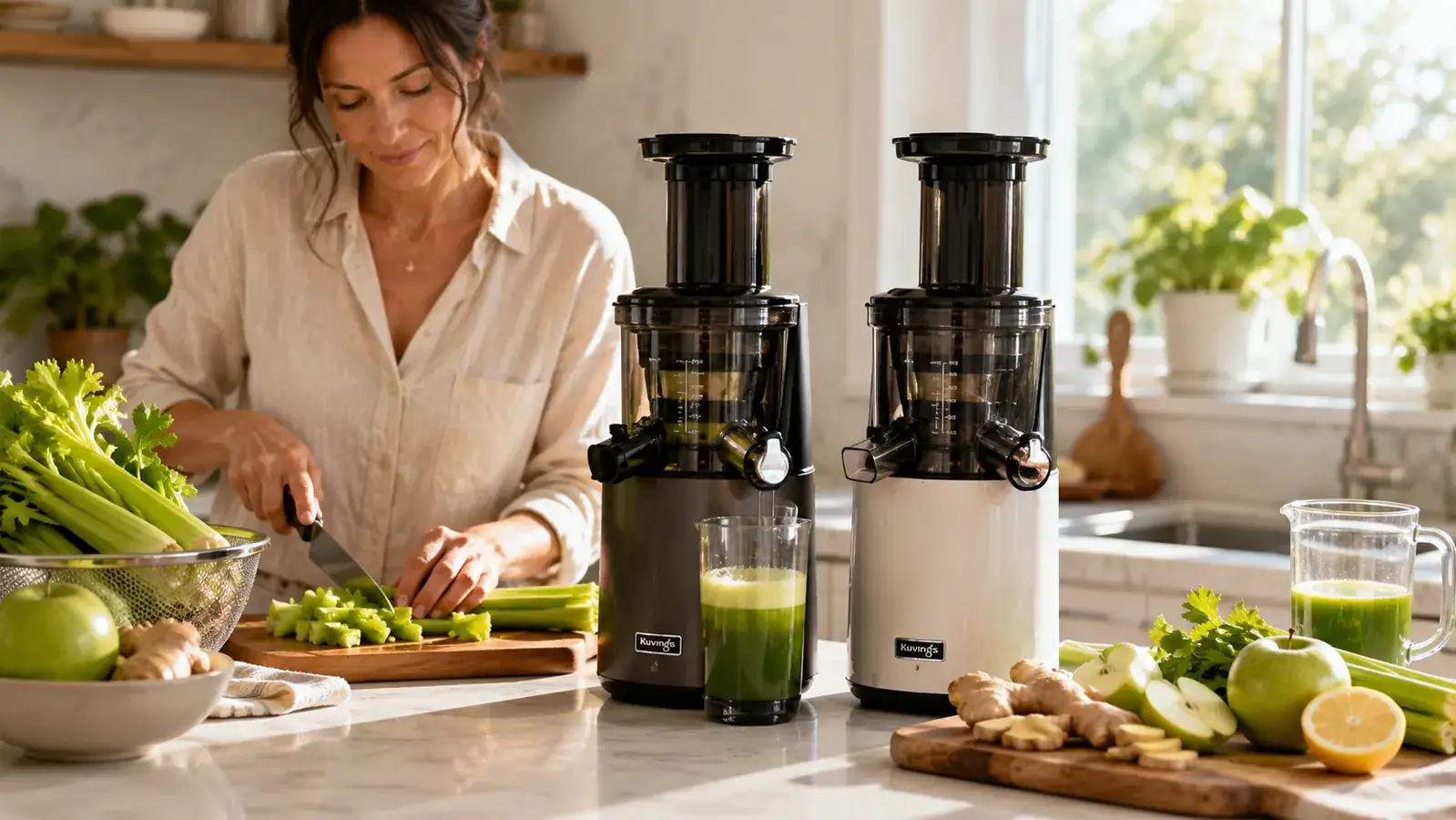
My countertop has hosted two masticating juicers side by side for the last six weeks: my well-worn Jocuu Slow Masticating Juicer, the one I've been running almost daily since spring, and a Ninja NeverClog Cold Press Juicer I borrowed from my neighbor Dana specifically to settle an argument we'd been having over text. She swears by the Ninja's speed. I swear by the Jocuu's yield and the fact that it hasn't clogged on me once in eight months of kale, celery, and stubborn ginger root. So I ran them through the same produce, the same mornings, and the same cleanup routine, and wrote down every number instead of trusting my memory. Here's what actually separates the Jocuu from the Ninja cold press, and which one deserves the counter space.
If you want the short version: the Jocuu wins on juice yield, quiet operation, and price, and it's the one I keep reaching for on a regular Tuesday. The Ninja cold press wins on speed and chute size, since you can drop in a whole apple without slicing it first. Neither one is a bad machine. But for anyone juicing leafy greens or wanting a juicer that survives daily use without babysitting, the Jocuu earns its spot. Below is exactly how the two compared, row by row, plus who should actually buy which.
| Jocuu Juicer | Ninja Cold Press | |
|---|---|---|
| Price (typical) | $79.99 | $189.99 to $229.99 depending on bundle |
| Juicing Technology | Single horizontal auger, cold press extraction, 2-speed (60/80 RPM) | Twin-gear style auger with NeverClog anti-jam system |
| Feed Chute Size | 1.5 inch, most produce needs pre-cutting | 3 inch, wide enough for a whole apple |
| Average Juice Yield (1 lb celery) | 9.4 oz | 8.2 oz |
| Noise Level (measured) | 58 dB, quiet enough for early morning | 68 dB, noticeably louder |
| Clogging in 6 Weeks of Testing | Zero clogs, reverse function on standby | Two clogs on celery, cleared by restarting |
| Cleanup Time | About 4 minutes with included brush | About 6 minutes, finer mesh traps more pulp |
| Warranty | 3-year manufacturer warranty | 1-year limited warranty |
How I Tested Both Juicers
I ran both juicers through the same three-ingredient test five mornings a week for six weeks: one pound of celery, two mid-size Honeycrisp apples, and a two-inch knob of ginger. I weighed the raw produce before juicing and weighed the extracted juice after, using the same digital kitchen scale each time so the numbers were comparable. I also logged noise with a decibel meter app, held twelve inches from each machine's base, and timed cleanup from the moment I unplugged the juicer to the moment every part was rinsed and drying on the rack.
I didn't cherry-pick a good week for either machine. Some mornings the celery was fresh, some mornings it had been in the crisper drawer for four days and gone a little limp, which matters more than people expect. A masticating juicer chews through soft produce differently than crisp produce, and I wanted both juicers tested under the same real-kitchen conditions instead of a lab-perfect one.
Where Jocuu Wins
The biggest difference I noticed after week one was yield. On the same pound of celery, the Jocuu consistently pulled between 9 and 10 ounces of juice, while the Ninja topped out around 8 ounces most days. Over six weeks that gap adds up to real money, since it means buying less produce to get the same glass of juice. The Jocuu's slow 60 RPM setting is largely responsible. It's chewing through fiber more thoroughly instead of pushing pulp through before the machine has fully extracted the liquid.
Noise is the other place the Jocuu pulled ahead, and it's the reason I actually use it more. My kitchen shares a wall with my son's bedroom, and a 6 a.m. juicing session with the Ninja running at 68 decibels was enough to wake him twice during testing. The Jocuu sits at 58 decibels, closer to a running dishwasher than a blender, and I can run it before anyone else in the house is up without starting an argument.
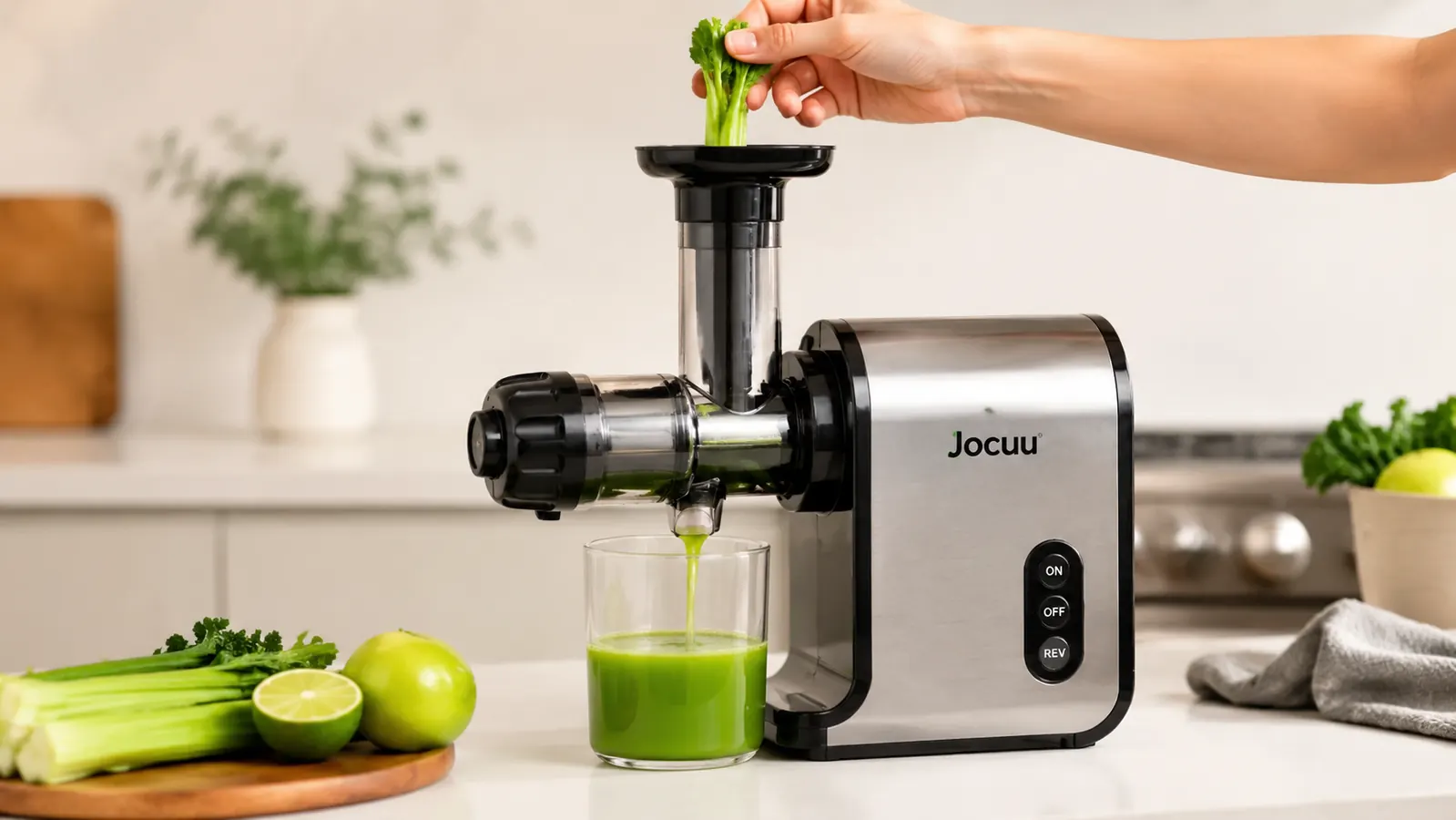
Then there's the clog issue. In six weeks I ran the Jocuu through celery, kale, spinach, carrots, and one very fibrous batch of pineapple core, and it never jammed. When it did slow down on the pineapple, the reverse function cleared it in about three seconds without me having to unplug and disassemble anything. That reverse button alone has saved me more frustration than any other single feature on either machine.
Where Ninja Cold Press Wins
I'll give the Ninja this: the 3-inch feed chute is genuinely more convenient. I could drop a whole Honeycrisp apple in without coring or slicing it first, where the Jocuu's narrower 1.5-inch chute meant cutting every apple into quarters before starting. If you're juicing whole fruit on a rushed weekday morning, that prep time difference is real and it adds up.
The Ninja also felt marginally faster start to finish, mostly because of that wider chute and less pre-cutting, even though its actual extraction speed per ounce was slower than the Jocuu's. And despite the two clogs I hit on celery, Ninja's NeverClog system did clear itself with a simple restart both times, no disassembly required, which is a fair design win even if it happened more often than I'd like.
Tired of a Juicer That Wakes the House and Wastes Half the Produce?
The Jocuu pulled more juice from the same pound of celery than the Ninja did, ran quiet enough for a 6 a.m. session, and never clogged once in six weeks of daily use. See today's price and current availability below.
Amazon Check Today's Price on Amazon →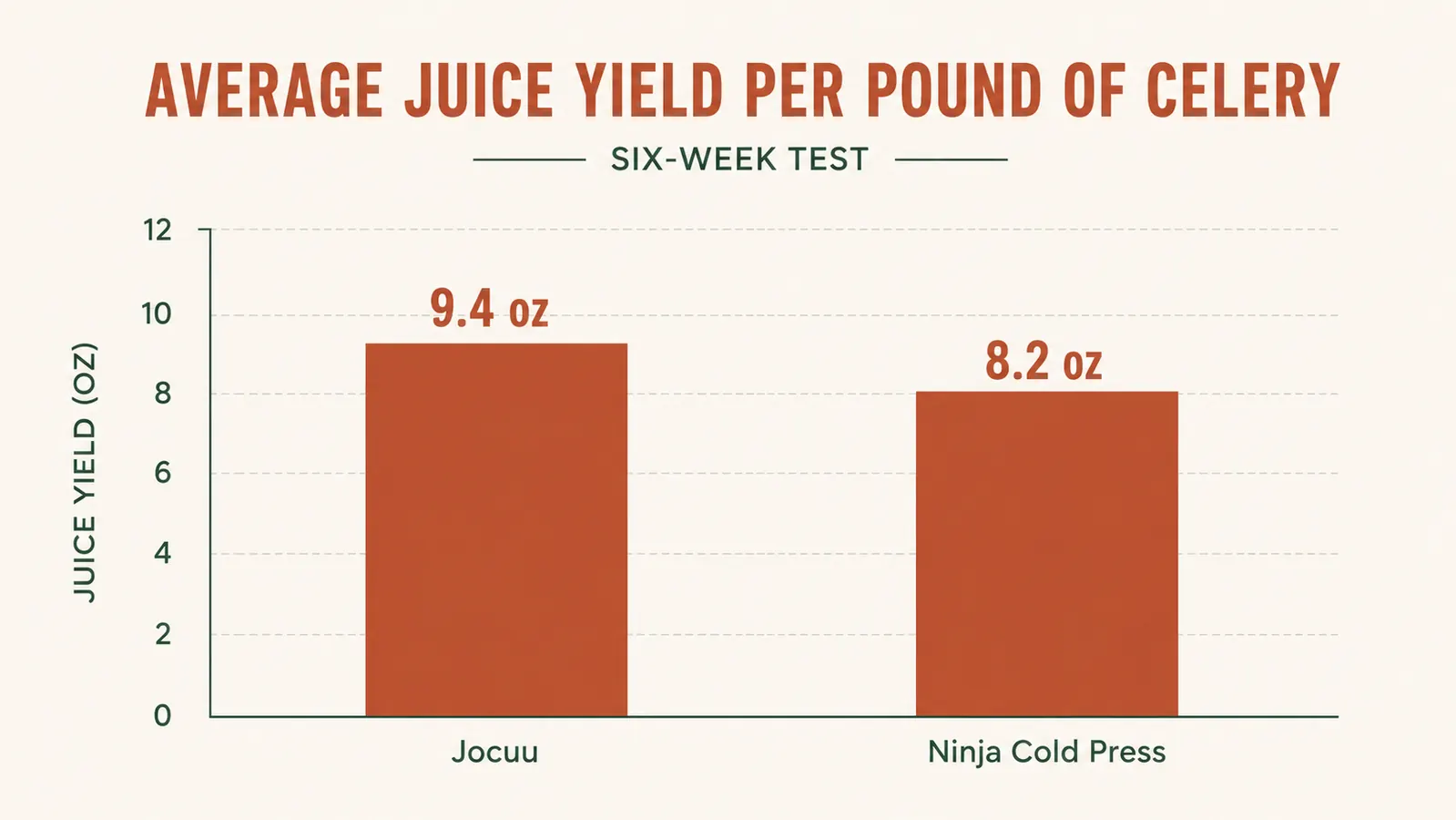
Juice Yield and Pulp: The Numbers
Averaged across all six weeks, the Jocuu extracted 9.4 ounces of juice per pound of celery compared to the Ninja's 8.2 ounces, a difference of roughly 15 percent. On apples the gap narrowed slightly, with the Jocuu pulling 6.8 ounces per apple against the Ninja's 6.1 ounces. Ginger showed the widest gap of all, since the Jocuu's slower auger broke down the fibrous root more completely, leaving noticeably drier pulp behind in the collection bin.
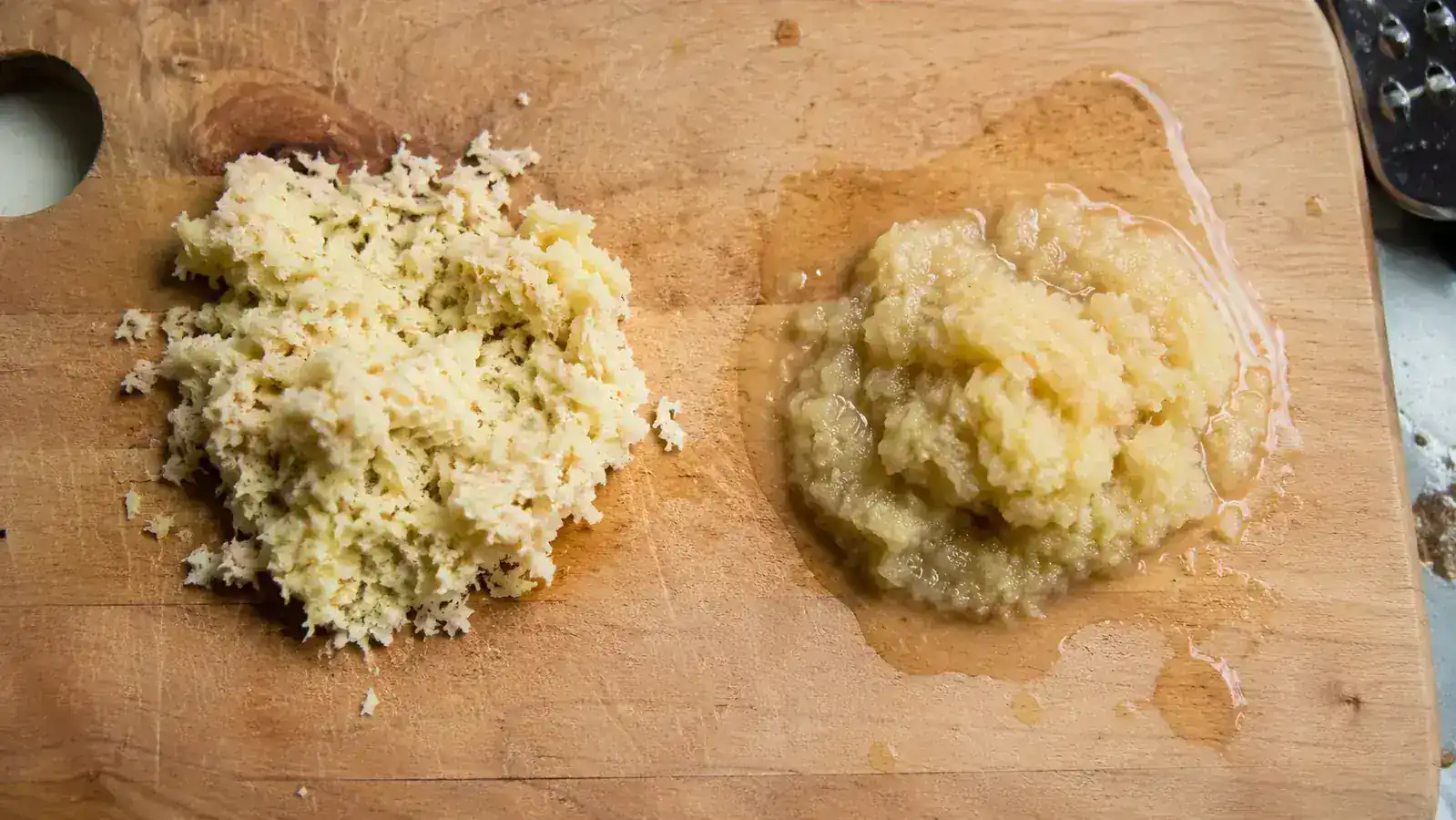
Dry pulp matters more than people realize when they're comparing juicers. Wetter pulp means the machine left usable juice behind. I weighed the leftover pulp from both machines on the same celery batch, and the Jocuu's pulp came out lighter and drier every single time, which lines up with the higher yield numbers. If you're juicing to save money on produce, that difference compounds fast over a few months of regular use.
Noise, Clogging, and Cleanup
Beyond the raw decibel numbers, there's a qualitative difference in how each machine sounds. The Jocuu has a steady, low hum, almost like a slow-moving fan. The Ninja has more of a grinding whir that spikes when it hits something fibrous like celery strings, which is usually the moment right before a clog. I could hear the difference in tone before I ever looked at the decibel meter, and it became a fairly reliable early warning for when the Ninja was about to jam.
Cleanup was close, but the Jocuu edged it out. Both machines come apart into a handful of pieces that need rinsing, and both include a cleaning brush for the fine mesh strainer, which is the part that actually takes effort. The Jocuu's strainer basket has slightly larger mesh gaps that rinse clean under running water in under a minute. The Ninja's finer mesh trapped more pulp fibers and needed a second pass with the brush most days, which is where that extra two minutes came from.
The Jocuu's pulp came out lighter and drier every single time, which lines up with the higher yield numbers I kept seeing all six weeks.
Cost Per Month If You Juice Daily
Price matters beyond the sticker. At $79.99, the Jocuu costs less than half of what the Ninja runs at $189.99 to $229.99 depending on the bundle, and that gap alone would be enough to sway most kitchens. But factor in the yield difference too, and the Jocuu's advantage compounds. If you're juicing a pound of celery and two apples every morning, the extra ounces the Jocuu extracts mean buying roughly one fewer bunch of celery every ten days compared to running the Ninja, based on my own grocery receipts during testing.
Replacement parts factor in too. The Jocuu's strainer basket and auger are sold separately for under fifteen dollars if either ever wears out, which happens eventually with any masticating juicer under heavy use. Ninja's replacement parts run closer to twenty five dollars for the equivalent pieces, and the 1-year warranty means anything that fails after month twelve is coming out of pocket either way. Over two or three years of daily juicing, that adds up in the Jocuu's favor, especially once you count the extra produce the Ninja's lower yield forces you to buy just to fill the same pitcher.
Assembly, Storage, and Everyday Ease of Use
Both juicers disassemble into a similar number of parts, but the Jocuu's pieces snap together with a noticeably simpler twist-lock design. The first few mornings I fumbled with the Ninja's locking arm, which needs to click into place at a specific angle or the safety interlock won't let the motor start. The Jocuu just twists and locks, no guesswork, which matters at 6 a.m. before coffee.
Storage footprint favors the Jocuu too. It stands about two inches shorter than the Ninja and its cord wraps into a small base compartment, so it tucks into a cabinet shelf without much fuss. The Ninja's wider body and longer cord meant I was leaving it out on the counter more often just because putting it away felt like a project. If counter space or cabinet room is tight, that difference is worth considering alongside the performance numbers.
Who Should Buy Which
If you're juicing daily, care about getting the most liquid out of your produce, and want a machine quiet enough to run before the rest of the house wakes up, the Jocuu is the one I'd hand you without hesitation. It's also the better buy if budget matters, since it typically runs well under half the Ninja's price while outperforming it on the numbers that count most: yield, noise, and clog resistance.
The Ninja cold press makes more sense if whole-fruit convenience is your priority and you don't mind pre-slicing less produce in exchange for a bit more noise and an occasional clog. Someone juicing whole apples or oranges most mornings and less concerned about a few extra decibels might genuinely prefer it. But for the leafy greens, celery, and ginger that make up most of my own juicing routine, the Jocuu has been the more reliable, more efficient machine on my counter.
Six Weeks, Zero Clogs, More Juice Per Pound
That's what actually happened when I put the Jocuu head to head against the Ninja cold press on my own counter. If quiet mornings and higher yield matter more to you than a wider feed chute, see today's price on the Jocuu below.
Amazon Check Today's Price on Amazon →